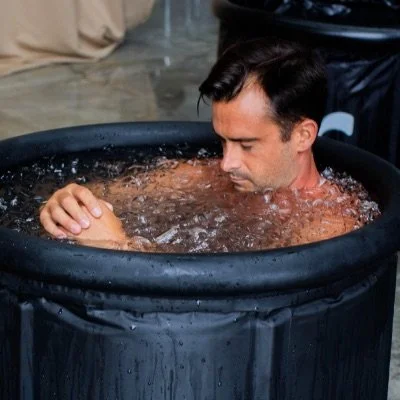
Brown Fat, Mitochondria and Cold Exposure: The Science Behind Cold Therapy
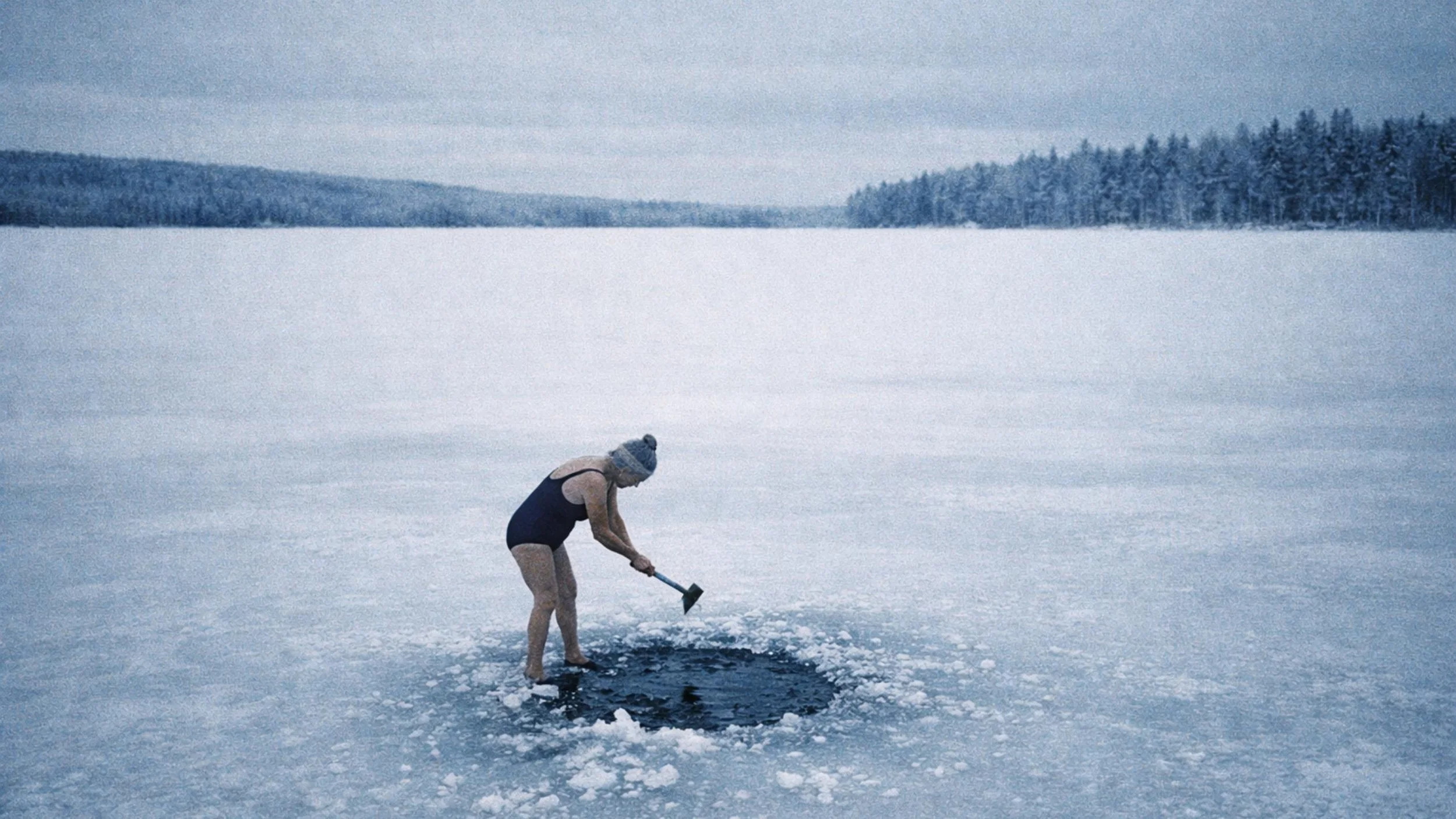
When you step into cold water, you feel it everywhere at once. The sharp intake of breath. The sudden tightening across your chest. The clarity that follows.
Most people stop there, at the sensation. But the more interesting story is happening underneath, inside the fat cells, the mitochondria, and the hormonal signals your body fires within seconds of contact with cold.
Cold exposure does not just feel intense. It changes your biology.
This article explains exactly how, referencing the mechanisms and research that matter most.
What Brown Fat Actually Is (And Why It Is Not Like Regular Fat)
Fat has a reputation problem. Most people think of it as inert storage, something your body accumulates when you eat too much and burns when you eat less. That description is accurate for white adipose tissue (WAT), the fat that pads your belly, hips, and thighs. But it is an entirely wrong description for brown adipose tissue (BAT).
Brown fat is thermogenic. Its job is not to store energy but to burn it and generate heat. This difference comes down to a protein called UCP1 (uncoupling protein 1), found in the mitochondria of brown fat cells. Where normal mitochondria convert fuel into ATP (cellular energy), UCP1 causes the mitochondria in brown fat to short-circuit that process and release energy as heat instead. It is a furnace built into your fat.
BAT gets its color from mitochondrial density. Brown fat cells are packed with mitochondria, far more than white fat cells, and it is that density of iron-rich mitochondria that gives the tissue its darker appearance and its metabolic potency.
Adults were once thought to have negligible amounts of brown fat. Research over the past two decades has overturned that assumption entirely. Active BAT deposits have been identified in adults at the neck, collarbone, spine, and kidneys, and their activity correlates strongly with metabolic health markers including insulin sensitivity, fasting glucose, and BMI.
How Cold Signals Brown Fat to Activate
The activation pathway begins within seconds of cold exposure.
Cold temperatures trigger the sympathetic nervous system, which releases norepinephrine into the bloodstream. Norepinephrine binds to beta-3 adrenergic receptors on brown fat cells, activating UCP1 and initiating thermogenesis. The brown fat begins burning fatty acids and glucose to produce heat, and your core temperature is defended against the cold.
Acute cold exposure promptly activates BAT to induce non-shivering thermogenesis (NST), which contributes to immediate maintenance of body temperature. PubMed Central
The key word there is non-shivering. Shivering is a muscular response to cold, burning fuel via skeletal muscle contractions. BAT-driven thermogenesis happens without shivering, which means your body has the capacity to generate heat quietly, at rest, without any muscular effort. This is why people who train with regular cold exposure often report feeling warmer overall, and tolerating cold better over time: their BAT has become more responsive.
Prolonged cold exposure recruits BAT, resulting in increased capacity for non-shivering thermogenesis and improved cold tolerance. PubMed Central
What the Søberg Study Found: Cold, Brown Fat, and Energy Expenditure
The most cited human study on cold adaptation and BAT is the Søberg et al. (2021) paper published in Cell Reports Medicine, conducted at the University of Copenhagen. It compared experienced male winter swimmers (people who combined regular cold-water immersion with hot sauna 2-3 times per week) against a matched control group.
Researchers found that winter-swimming men, who combined cold-water immersion with hot sauna, burned significantly more calories during cooling than controls, despite similar activation of brown fat as measured by glucose uptake. Cell Press
The energy expenditure finding was striking. Cold-induced thermogenesis was substantially higher in the winter swimmer group, with energy expenditure increased by 500-1,000 kcal per 24 hours during cooling, compared to a prior reference figure of approximately 20 kcal per 24 hours for BAT in older adults. PubMed Central
This suggested that consistent cold exposure does not just activate brown fat. It appears to mature and enhance the thermogenic capacity of the tissue. The adapted swimmers were burning dramatically more calories during the same cold challenge as untrained controls.
The chart below visualises the key energy expenditure contrast from that study:
Cold-induced thermogenesis: winter swimmers vs controls
Søberg et al., Cell Reports Medicine (2021) — University of Copenhagen
REE at thermal comfort: swimmers ~2,038 kcal/day vs controls ~2,005 kcal/day (no significant difference at rest). Cold-induced thermogenesis: swimmers +500 to +1,000 kcal/24h vs controls ~+20 kcal/24h. Cold-induced value shown as midpoint estimate of reported range.
The contrast in cold-induced thermogenesis is the critical finding. At rest in a warm room, both groups expended roughly the same energy. But when challenged with cold, the trained swimmers generated dramatically more heat, pointing to a deeply adapted thermogenic system.
Researchers propose that winter swimming, combining cold-water immersion with hot sauna, could be a strategy to increase energy expenditure and potentially contribute to weight management. Cell Press
Going Deeper: Susanna Søberg's Book, Winter Swimming
The research referenced throughout this article draws heavily from Dr. Søberg's published work, but if you want the full picture, her book Winter Swimming: The Nordic Way Towards a Healthier and Happier Life is the most accessible and thorough treatment of the subject available.
The chapter on brown fat is a particular highlight, where Søberg reveals the truth behind this tissue and explains how the brown colour of brown adipose tissue comes from an increased density of mitochondria in the cells, many more than are found in white fat cells.
The book walks through the cold-shock response, the endorphin rush that follows cold immersion, and the downstream effects on circulation, immune function, metabolism, and mental health, all grounded in Søberg's clinical research background. Soeberginstitute It is not a dry academic text. The science is woven through with cold-water traditions from Scandinavia and around the world, and the photography throughout is genuinely stunning.
Søberg's research and principles have featured on the Huberman Lab Podcast, the Lex Fridman Podcast, and the Joe Rogan Experience, bringing the science of cold therapy to a global audience. The book is the best single resource for anyone who wants to understand not just what cold does, but why it does it.
Whether you are new to cold exposure or already training consistently, it is worth having on the shelf.
Recommended reading
Winter Swimming
Dr. Susanna Søberg. The science behind cold-water immersion, brown fat activation, and the Nordic approach to year-round cold exposure.
Get the book on AmazonThis is an affiliate link. If you purchase through it, Ritual Recovery may earn a small commission at no extra cost to you.
Mitochondria: The Engine Inside the Engine
Brown fat's thermogenic power depends entirely on its mitochondria. More mitochondria, more heat-producing capacity. Better-functioning mitochondria, more efficient fuel burning.
Cold exposure does not just activate existing mitochondria. It drives mitochondrial biogenesis, the creation of new mitochondria within existing cells, through a pathway involving PGC-1alpha (peroxisome proliferator-activated receptor gamma coactivator 1-alpha), the master regulator of mitochondrial production.
This is why regular cold exposure produces compounding benefits over time. Each session signals your cells to invest in more energy-generating infrastructure. Your mitochondrial density increases. Your cells become more efficient at extracting energy from fuel. And, critically, this adaptation is not limited to brown fat. Cold-driven mitochondrial biogenesis also occurs in skeletal muscle and, through a browning process, in white adipose tissue.
Cold exposure stimulates the activation of BAT and the emergence of beige adipocytes within white adipose tissue depots, resulting in enhanced thermogenesis and energy expenditure. ScienceDirect
These beige fat cells are a conversion product: white fat cells that begin behaving more like brown fat, expressing UCP1 and developing greater mitochondrial density. This browning of white fat is one of the more compelling long-term adaptations to consistent cold exposure.
Metabolic Benefits Beyond Calorie Burning
The downstream effects of activated brown fat and improved mitochondrial function extend well beyond thermogenesis.
Active BAT is associated with significantly better glucose metabolism. It acts as a glucose sink, taking up blood sugar directly during activation, and this process improves whole-body insulin sensitivity. Studies in people with higher BAT activity consistently show lower fasting glucose, better insulin response, and reduced risk of type 2 diabetes.
Cold exposure increases the uptake of non-esterified fatty acids (NEFA) into brown adipose tissue, improving lipid metabolism alongside glucose regulation. Frontiers
People with more active BAT also tend to have healthier cholesterol profiles. The tissue actively takes up and oxidises circulating lipids during thermogenesis, contributing to lower triglyceride levels and improved cardiovascular risk markers.
From a metabolic flexibility standpoint, consistent cold exposure trains the body to switch efficiently between fat and glucose as fuel sources. This metabolic flexibility, the ability to use the right fuel at the right time, is associated with better energy levels, reduced insulin resistance, and improved body composition.
How to Apply This: A Protocol Based on the Research
You do not need extreme temperatures or extended sessions to activate these pathways. The research points to a consistent, moderate approach.
Based on Søberg's recommendations and the broader literature, a practical cold exposure protocol for BAT activation and mitochondrial adaptation looks like this:
| Variable | Beginner | Intermediate | Advanced |
|---|---|---|---|
| Water temperature | 15-18°C | 12-15°C | 8-12°C |
| Session duration | 1-2 minutes | 2-4 minutes | 3-5 minutes |
| Frequency per week | 2 sessions | 3 sessions | 4-5 sessions |
| Post-session | Air dry, no hot shower | Air dry, light movement | Air dry or sauna contrast |
| Key adaptation signal | Shivering tolerance | Faster rewarming | Reduced cold shock response |
| Primary mechanism targeted | BAT activation | BAT activation and biogenesis | Mitochondrial density and beige fat browning |
One specific principle from Søberg's work is worth applying from the start: avoid a hot shower immediately after your cold plunge. The rewarming process, where your body works to bring its own temperature back up, is part of the adaptation stimulus. Cutting it short with hot water reduces the thermogenic demand and limits the signal sent to your brown fat and mitochondria.
The Long View: Cold Exposure and Cellular Aging
Mitochondrial decline is one of the central features of biological aging. As you get older, mitochondrial density decreases, mitochondrial function becomes less efficient, and the resulting energy deficit shows up as fatigue, slower recovery, and reduced metabolic rate.
Cold exposure is one of the few non-pharmacological stimuli shown to counteract this decline by consistently signalling mitochondrial biogenesis. Every cold session is, in part, a signal to your cells to invest in their energy infrastructure.
The cumulative effect over months and years is a more metabolically capable body: better at generating energy, better at clearing metabolic waste, and better at regulating blood sugar and fat. Not because of one dramatic session, but because of consistent, repeated hormetic stress.
Your body was designed to handle cold. The biology is already there. Regular cold exposure does not install new systems. It trains the ones you already have.