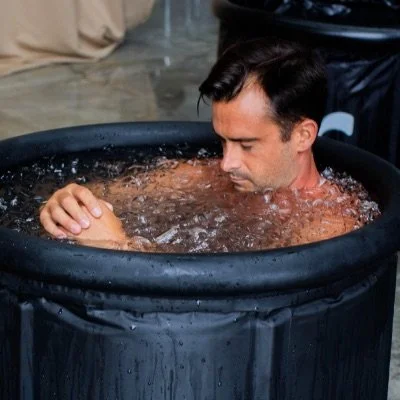
Ice Bath After Running - Benefits of cold therapy for post run recovery
Benefits of Ice Bath After Running
The local run club session is now part of the weekly routine for more Australians than ever. Saturday morning parkrun, Tuesday night track, Sunday long run. And with more people stacking kilometres, more people are waking up on Monday hobbling. Ice baths after running are gaining real traction as a recovery tool, not just in elite sport but in the everyday training lives of endurance athletes who need to bounce back fast and do it again in 48 hours.
The question is not whether ice baths feel effective. Most runners who try them report genuine relief. The question is what the peer-reviewed evidence actually says, which mechanisms are responsible, and how to apply the protocol correctly to get the most out of a post-run cold immersion without undermining the adaptations your training is designed to produce.
This article covers the physiology, the key research findings, and a practical protocol you can implement after your next run.
Do Ice Baths Actually Speed Up Recovery After Running?
The short answer: yes, with important nuance on what kind of recovery you are targeting.
A 2023 meta-analysis published in Frontiers in Physiology (Xiao et al.) pooled data from 20 studies and found that cold water immersion significantly reduced DOMS and perceived exertion at immediate post-exercise assessment, and significantly lowered creatine kinase (a marker of muscle damage) at 24 hours post-exercise. Lactate was also reduced at 24 and 48 hours.
A larger 2023 meta-analysis published in Sports Medicine (Moore et al., University of South Australia, 52 RCTs) found that cold water immersion improved muscle soreness (standardised mean difference of -0.89) and perceived feelings of recovery (SMD 0.66) at 24 hours after high-intensity exercise. Critically, it also identified a dose-response relationship: shorter immersion durations at lower temperatures produced the largest benefits for serum creatine kinase clearance and endurance performance recovery.
For runners specifically, endurance training is where the evidence is strongest. Cold water immersion consistently performs better for endurance-type exercise recovery than for strength or hypertrophy sessions, likely because the inflammatory cascade from long-duration cardiovascular work responds differently to cold than the anabolic signalling from resistance training.
Sources: Xiao et al. (2023) Frontiers in Physiology (20 studies); Moore et al. (2023) Sports Medicine (52 RCTs, University of South Australia)
Serious runners track everything
If you are training hard enough to need ice bath recovery, you need a device that measures whether that recovery is actually working.
Garmin Fenix 8. GPS, HRV, training load, recovery tracking. One device built for runners who mean it.
View on AmazonHow Ice Baths Work: The Physiology Behind the Recovery
1. Vasoconstriction and the Vascular Flush
When you step into cold water after a run, peripheral blood vessels constrict rapidly. Blood is shunted away from the surface tissues toward your core. This limits the flow of inflammatory mediators to fatigued muscle fibres and reduces the accumulation of metabolic byproducts including lactate and creatine kinase in the tissue. When you exit, a powerful vasodilation rebound occurs: oxygenated, nutrient-rich blood returns to the muscles with unusual efficiency. This pump-like cycle is the primary mechanism behind the soreness reduction runners report.
2. Reduction of Tissue Swelling and Inflammation
Running, particularly long-distance or hilly running, creates significant mechanical stress on muscle fibres. The inflammatory response that follows is necessary for repair but excessive inflammation prolongs pain and delays the return to full function. Cold-induced vasoconstriction limits the volume of inflammatory mediators reaching the affected tissue in the critical post-exercise window, modulating rather than eliminating the inflammatory response. The goal is not to shut inflammation down entirely: some degree of it is required for adaptation. The goal is to reduce the excess that serves no productive recovery function.
3. Analgesic Effect
Cold exposure reduces nerve conduction velocity. Pain signals from fatigued and micro-damaged muscle tissue travel more slowly in cold temperatures. The numbing effect is immediate and genuine. This is why runners stepping out of an ice bath often report a dramatic reduction in acute soreness within minutes of the session, before any systemic recovery process has had time to operate. The analgesic response is the fastest-acting mechanism, and it is why ice baths feel so effective even for people who are sceptical of the underlying physiology.
4. Reduced Secondary Muscle Damage
After intense exercise, a secondary wave of muscle damage can occur in the hours following the primary mechanical stress. Cold immersion, by reducing metabolic activity in the muscle tissue and limiting the inflammatory cascade, may reduce the severity of this secondary damage. A 2025 network meta-analysis across 55 RCTs (Wang et al., Frontiers in Physiology) found that 10-15 minutes at 5-10°C was most effective for creatine kinase reduction and neuromuscular recovery, suggesting the secondary damage window is best addressed within the first hour post-exercise.
Source: Wang et al. (2025) Frontiers in Physiology, 55 RCTs network meta-analysis
5. Psychological and Perceived Recovery
The psychological dimension is real and not something to dismiss. Moore et al. (2023) found a standardised mean difference of 0.66 for perceived feelings of recovery at 24 hours, which is a meaningful effect size. Runners who feel recovered run better the next day, even when objective markers are similar. The sense of having done something deliberate and effortful for recovery: stepping into cold water rather than just eating takeaway on the couch: contributes to the overall recovery mindset that compounds over a training block.
Serious runners track their recovery
Your HRV on Monday morning tells you whether Saturday's ice bath actually worked.
Garmin Fenix 8 tracks HRV, recovery, training load, and sleep. Built for athletes who run with data, not just intention.
View on AmazonPractical Protocol: Ice Bath After Running
The optimal protocol depends on what you are trying to achieve. The Wang et al. (2025) network meta-analysis identified 10-15 minutes at 5-10°C as most effective for creatine kinase clearance and neuromuscular recovery. Use the table below to match the protocol to your goal.
| Goal | Temperature | Duration | Timing |
|---|---|---|---|
| Soreness reduction | 10–15°C | 10–15 minutes | Within 60 min post-run |
| CK clearance (muscle damage) | 5–10°C | 10–15 minutes | Within 30 min post-run |
| Repeated performance same day | 10–15°C | 10–15 minutes | Between sessions |
| Avoid (strength day) | Any cold | Delay 4+ hours | Do not use immediately post-lift |
| Sources: Wang et al. (2025) Frontiers in Physiology (55 RCTs); Moore et al. (2023) Sports Medicine (52 RCTs, University of South Australia). | |||
Step-by-Step Post-Run Protocol
Before: Drink 300-500ml of water before immersion. Electrolytes post-session are more important than pre-session for runners.
Temperature: Aim for 10-15°C to start. The Moore et al. dose-response analysis found shorter durations at lower temperatures produced the strongest CK clearance. You do not need to go to 4°C to get the benefit.
Duration: 10-15 minutes. Beyond 15 minutes the returns diminish significantly. The Bieuzen meta-analysis and Wang network meta-analysis both converge on this window.
Submersion: Cover as much of the lower body and torso as possible. Hydrostatic pressure from full immersion amplifies venous return and lymphatic drainage in ways a shower cannot replicate.
After: Allow natural rewarming. Do not jump straight into a hot shower. Allow 15-20 minutes for the residual vasoconstriction to persist and the vascular flush to complete.
Timing: Within 60 minutes of finishing your run. The earlier in this window the better, particularly for creatine kinase clearance and perceived recovery at 24 hours.
Why Ice Baths Work Particularly Well for Runners
The evidence is clearest for endurance exercise and cold water immersion. This is not a coincidence. Running, particularly long-distance running, produces a specific physiological profile: sustained low-grade mechanical stress, significant lactate accumulation, high core temperature, extensive glycogen depletion, and a strong systemic inflammatory response. Cold water immersion addresses most of these simultaneously in a way that is less relevant for the acute mechanical damage profile of heavy resistance training.
The Xiao et al. (2023) Frontiers in Physiology meta-analysis specifically noted that endurance running was one of the most represented exercise protocols in the cold water immersion literature, and that DOMS and perceived exertion reductions were significant across the pooled endurance data. The Moore et al. (2023) Sports Medicine analysis also noted positive outcomes for endurance performance recovery, with the dose-response analysis pointing to shorter immersions at colder temperatures as the most effective configuration for endurance athletes specifically.
For back-to-back training days, runs on consecutive mornings, or multi-stage events, ice baths after each session provide a meaningful compression of the recovery timeline that passive rest alone cannot match.
Sources: Xiao et al. (2023) Frontiers in Physiology; Moore et al. (2023) Sports Medicine
Pairing Ice Baths with Sauna: Contrast Therapy for Runners
Many runners who have access to both a sauna and an ice bath are now using contrast therapy as their primary post-run recovery protocol. The alternating vasodilation from heat and vasoconstriction from cold creates a vascular pump effect that accelerates metabolic waste clearance beyond what either modality achieves alone.
A practical post-run contrast protocol: 15 minutes in the sauna at 80-90°C, then 2-3 minutes in the ice bath at 10-15°C, repeated for 2-3 rounds, finishing on cold. The sauna session opens up blood flow and initiates deep tissue warming. The cold phase drives the pump mechanism. The alternation is what creates the synergistic effect.
For runners whose primary goal is returning to quality training as fast as possible, contrast therapy represents the most comprehensive single-session recovery intervention currently supported by the evidence base.
Frequently Asked Questions
How cold should the ice bath be after running?
Between 10°C and 15°C is the evidence-supported range for most runners. The 2025 Wang et al. network meta-analysis across 55 RCTs found 5-10°C for 10-15 minutes was most effective for creatine kinase clearance and neuromuscular recovery, suggesting the colder end of the range is worth targeting if you can tolerate it. Water above 15°C reduces the magnitude of the vasoconstriction response significantly and is unlikely to produce meaningful recovery benefit.
How long should I sit in an ice bath after a run?
Ten to fifteen minutes is the optimal window supported by the research. This is long enough to trigger the vasoconstriction, the analgesic effect, and the early phase of metabolic waste clearance, without introducing unnecessary thermal stress. The Moore et al. (2023) dose-response analysis found shorter immersion durations at colder temperatures produced the strongest outcomes for endurance performance recovery, suggesting 10 minutes at 10°C is likely preferable to 20 minutes at 15°C.
Should I ice bath before or after a run?
After. The evidence for post-exercise cold water immersion is substantially stronger than for pre-exercise cold exposure. Post-run immersion targets the acute inflammatory response, metabolic waste accumulation, and tissue temperature at the moment these are most elevated and most responsive to cold. Pre-run cold exposure can reduce neuromuscular readiness and impair the initial performance output of your session.
Is an ice bath better than a cold shower after running?
Yes, for recovery purposes. Full body immersion creates hydrostatic pressure, an external compressive force on the limbs and torso that enhances venous return and lymphatic drainage. A cold shower provides the temperature stimulus but none of the hydrostatic component. The Moore et al. meta-analysis specifically noted that full immersion protocols outperformed shower-based cold exposure on recovery outcomes. If immersion is not available, a cold shower is better than nothing, but it is not equivalent.
Can I ice bath every day as a runner?
Most runners can use ice baths daily during high-volume training blocks or race preparation periods. The key caveat is that if you are in a hypertrophy or strength phase, cold immersion immediately after strength sessions may blunt mTOR signalling and reduce muscle protein synthesis. For pure endurance training, daily cold immersion does not carry this risk. Three to five sessions per week is a practical frequency for most runners outside of peak training blocks.
Final Thoughts
The evidence base for ice baths after running is genuinely strong, particularly for the outcomes endurance athletes care most about: reduced DOMS, faster creatine kinase clearance, improved perceived recovery, and better preparation for the next session.
Moore et al. (2023) across 52 RCTs and Xiao et al. (2023) across 20 studies both confirm that cold water immersion after high-intensity endurance exercise produces measurable, reproducible recovery benefits when the protocol is applied correctly.
The variables that matter are temperature, duration, timing, and submersion depth. Get those right, and a 10-15 minute ice bath after your next long run will do more for your Monday morning legs than any supplement, compression sock, or foam roller session.
At Ritual Recovery, our ice baths and chillers hold within 0.5°C of your target temperature, session after session. Because the difference between a therapeutic cold exposure and a cold bath that drifts unpredictably is the difference between a protocol and a guess.