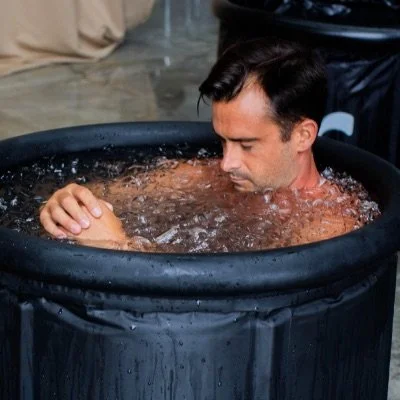
Ice Bath vs Sauna for Mental Health: Dopamine, Stress and Resilience
You meditate. You journal. You have tried the supplements, the apps, the breathwork courses. Yet the low-grade anxiety persists, the motivation dips without warning, and stress still accumulates faster than you can discharge it.
The missing lever might be thermal. When it comes to ice bath vs sauna for mental health, the conversation has moved well beyond anecdotal wellness claims. Peer-reviewed neuroscience now maps exactly how cold water immersion and heat exposure alter dopamine, endorphins, noradrenaline, and cortisol: the neurochemical architecture that governs how you feel, focus, and cope.
Both modalities work. But they work through fundamentally different pathways, on different timelines, with different practical implications. Understanding those differences lets you deploy each one with precision rather than guesswork.
You have already tried the slow fixes. This one takes two minutes.
Thousands of Australians are using deliberate cold exposure to shift their neurochemistry without a prescription, a subscription, or a 30-day program.
See the rangeHow Cold and Heat Reshape Your Brain Chemistry
Your mental state at any given moment is largely a product of neurochemical ratios. Dopamine drives motivation and reward. Noradrenaline sharpens focus and alertness. Endorphins blunt pain and elevate mood. Cortisol mobilises energy under stress, but erodes wellbeing when chronically elevated.
Temperature is one of the most potent non-pharmacological tools for shifting these ratios. Your body treats extreme cold and extreme heat as controlled stressors. Each triggers a cascade of hormonal and neurotransmitter responses designed to help you survive. Harness those cascades deliberately, and you gain a powerful lever for mental health.
The Cold Pathway: Catecholamine Dominance
Cold water immersion activates the sympathetic nervous system almost instantly. Within seconds of submersion, noradrenaline surges. Dopamine follows and keeps climbing. A landmark study by Sramek et al. (2000), published in the European Journal of Applied Physiology, found that immersion in 14°C water elevated plasma dopamine concentrations by 250% and noradrenaline by 530% above baseline.
Critically, this dopamine elevation is sustained. Unlike the sharp spike-and-crash pattern produced by stimulants, social media, or sugar, cold plunge mental health benefits stem from a gradual rise that remains elevated for hours after you exit the water. There is no corresponding depletion or withdrawal, which is why many practitioners use daily cold immersion as a long-term alternative to excessive caffeine.
A 2025 fMRI study published in PLOS ONE found that whole-body cold water immersion increases neural interaction between large-scale brain circuits involving multiple limbic structures, including the medial prefrontal cortex, anterior insula, and anterior cingulate cortex: regions directly implicated in emotion regulation and stress processing (Yankouskaya et al., 2023).
The Heat Pathway: Endorphin and BDNF Dominance
Sauna exposure takes a different route. Sustained heat stress triggers the release of beta-endorphins, your body's endogenous opioids. These are the same compounds responsible for the euphoric calm of a runner's high. Heat also activates the raphe nuclei, stimulating serotonin synthesis: the same neurotransmitter system targeted by SSRI medications.
Heat also upregulates brain-derived neurotrophic factor (BDNF), a protein essential for neuroplasticity, neuronal survival, and long-term mood regulation. A randomised controlled trial by Leppamaki and colleagues found that a 10-week repeated hyperthermia programme produced significantly higher circulating BDNF compared to exercise alone. Critically, low BDNF is consistently found in depressed brains, and BDNF deficits are associated with impaired hippocampal function and emotional dysregulation.
Perhaps the most striking evidence for sauna's antidepressant potential comes from a 2016 RCT by Janssen et al., which found that a single whole-body hyperthermia session to 38.5°C core temperature produced antidepressant effects that lasted six weeks in patients with major depressive disorder: a sustained response from a single exposure.
Sauna endorphins provide the immediate subjective relief. BDNF provides the structural foundation for lasting neuroplastic change.
Ice Bath vs Sauna for Mental Health: The Neurochemical Comparison
Placing both modalities side by side reveals why the question "which is better?" misses the point. They target different systems, solve different problems, and stack powerfully when combined.
| Dimension | Ice Bath (Cold Immersion) | Sauna (Heat Exposure) |
|---|---|---|
| Primary neurotransmitter | Dopamine (+250%), noradrenaline (+530%) | Beta-endorphins, serotonin |
| Secondary mechanism | Sympathetic activation, HPA axis calibration | BDNF upregulation, parasympathetic rebound |
| Effect onset | Within 30 seconds of immersion | 10–15 minutes into session |
| Duration of effect | 3–5 hours post-session, no crash or depletion | 1–2 hours (endorphins); weeks (BDNF) |
| Best for | Low motivation, apathy, flat mood, fatigue | Anxiety, tension, rumination, burnout |
| Avoid if | High acute anxiety (may amplify sympathetic response) | Seeking immediate energy or drive |
| Optimal temperature | 3–15°C (colder = stronger catecholamine response) | 80–100°C traditional / 55–65°C infrared |
| Optimal duration | 2–5 minutes | 15–20 minutes per round |
| Frequency | 3–5x per week | 3–7x per week (4+ for depression reduction) |
| Best timing | Morning or early afternoon | Late afternoon or evening |
| Crash or withdrawal | None — sustained release, no neurochemical depletion | None |
| Key evidence | Sramek et al. (2000); UniSA meta-analysis 2025 (3,177 participants) | Janssen et al. (2016) RCT; Laukkanen & Kunutsor (2024) |
The pattern is clear. Cold water immersion dopamine responses address the low-energy, low-motivation end of the mental health spectrum. Sauna endorphins and BDNF address the high-tension, high-anxiety end. Your current mental state should dictate which tool you reach for.
The Stress Resilience Mechanism Most People Miss
Mental health is not just about feeling good in the moment. It is about building the capacity to withstand stress without breaking down. This is where both modalities deliver a benefit that no supplement or meditation app can replicate.
Hormetic Stress and the Toughening Effect
Both cold immersion and heat exposure are forms of hormesis: controlled, short-duration stress that forces your body to adapt. Each exposure trains your hypothalamic-pituitary-adrenal (HPA) axis to mount an appropriate stress response and then return to baseline faster.
A 2025 meta-analysis from the University of South Australia (Cain et al., PLOS ONE), spanning 11 randomised controlled trials and 3,177 participants, found that cold water immersion produced significant reductions in stress, anxiety, and depression scores in healthy adults. The effect was consistent across different temperatures (7-15°C) and immersion durations.
Over weeks and months of consistent practice, HPA axis calibration produces measurable ice bath stress resilience. Resting cortisol drops. Heart rate variability improves. You recover from psychological stress more quickly: not because life gets easier, but because your nervous system becomes more competent at handling load.
Cold Immersion: Training Voluntary Discomfort
There is a uniquely psychological dimension to cold plunge mental health benefits. Every time you voluntarily step into near-freezing water, you practise overriding your avoidance instinct. You choose discomfort. You regulate your breathing. You stay.
This is not metaphor. It is literal prefrontal cortex training. The same neural circuits that keep you calm in the ice bath are the circuits that keep you composed under deadline pressure, interpersonal conflict, or financial stress. Cold exposure is a rehearsal space for real-world resilience.
Research by Barwood et al. (2024) found that cold shock responses habituate after just four immersions, meaning the psychological demand of the practice becomes more manageable while the neurochemical benefit is preserved.
Sauna: Parasympathetic Recovery Training
Sauna trains the opposite side of the equation. Heat forces your heart rate up, sometimes as high as 120-150 beats per minute, mimicking moderate cardiovascular exercise. When you exit, your parasympathetic nervous system activates to bring everything back down. Repeated sauna sessions strengthen this recovery arm, teaching your body to shift out of fight-or-flight mode with greater speed and efficiency.
For those whose mental health challenges manifest as chronic tension, rumination, or an inability to switch off, this parasympathetic rebound is profoundly therapeutic. Finnish population data from Laukkanen and Kunutsor (2024) links four or more sauna sessions per week to significantly lower rates of depression and improved psychological wellbeing.
Practical Protocols: How to Use Each Modality for Mental Health
Knowledge without application is trivia. Here is how to translate the science into daily practice.
| Variable | Ice Bath Protocol | Sauna Protocol |
|---|---|---|
| Goal | Dopamine, noradrenaline, motivation, mental toughness | Endorphins, BDNF, anxiety relief, parasympathetic recovery |
| Temperature | 3–15°C Colder = stronger catecholamine response per minute |
80–100°C traditional / 55–65°C infrared Target core temp of ~38.5°C (Janssen et al. 2016) |
| Duration | 2–5 minutes Dopamine surge begins within 30 seconds |
15–20 min per round, 2–3 rounds Cool down fully between rounds |
| Timing | Morning or early afternoon Leverages dopamine lift for focus and drive |
Late afternoon or evening Parasympathetic rebound supports sleep onset |
| Frequency | 3–5x per week Min. 11 min/week total (Soberg Protocol) |
3–7x per week 4+ sessions/week linked to depression risk reduction |
| Breathing | Slow nasal breathing, extended exhale Calm breath under stress is the adaptation you are training |
Relaxed natural breathing Exit before breathwork becomes laboured |
| Avoid | Late evening (may delay sleep onset via elevated sympathetic tone) | Immediately post-strength training if hypertrophy is the goal |
| Contrast option | 15 min sauna → 2–3 min cold immersion, repeated 2–3 rounds. Delivers endorphin + dopamine response in a single session and trains autonomic flexibility. | |
| Sources: Sramek et al. (2000) Eur J Appl Physiol; Janssen et al. (2016) RCT; Laukkanen & Kunutsor (2024) Temperature; Soberg et al. (2021) Cell Reports Medicine. | ||
Ice Bath Protocol for Dopamine and Motivation
Temperature: 3-15°C for a meaningful catecholamine response. The Sramek research used 14°C and produced the 250-530% neurochemical elevation. Colder water intensifies the response per minute of exposure. Water above 15°C still provides some benefit, but the catecholamine magnitude diminishes substantially.
Duration: 2-5 minutes. The dopamine surge begins within the first 30 seconds and continues to build. Longer is not necessarily better. The goal is a potent stimulus, not endurance performance.
Timing: Morning or early afternoon. The dopamine and noradrenaline elevation promotes focus and drive throughout the day. Late-evening cold plunges can interfere with sleep onset in some individuals due to elevated sympathetic tone.
Frequency: 3-5 sessions per week for sustained mental health benefits. The Soberg Protocol recommends a minimum of 11 minutes per week total, spread across multiple sessions. Consistency matters more than intensity.
Breathing: Controlled nasal breathing during immersion. Avoid hyperventilation. The calm breath under stress is itself the adaptation you are training: a direct transfer to real-world stress regulation.
Sauna Protocol for Anxiety and Emotional Regulation
Temperature: 80-100°C (traditional Finnish sauna) or 55-65°C (infrared). Both produce endorphin and BDNF release, though traditional sauna generates a stronger cardiovascular and heat shock protein response. The Janssen 2016 RCT used 38.5°C core temperature as the therapeutic target.
Duration: 15-20 minutes per session. Multiple rounds of 10-15 minutes with cooling breaks between rounds are equally effective and may be preferable for those new to heat exposure.
Timing: Late afternoon or evening. The parasympathetic rebound after heat exposure pairs well with wind-down routines and supports sleep onset via passive body cooling (Haghayegh et al., 2019).
Frequency: 3-7 sessions per week. Finnish population studies from Laukkanen and Kunutsor link four or more sessions per week to significant reductions in depression risk and improved psychological wellbeing scores.
Combining Both: The Contrast Protocol
For maximum mental health benefit, many practitioners alternate between heat and cold in a single session. A common protocol: 15 minutes sauna, followed by 2-3 minutes cold immersion, repeated for 2-3 rounds.
This contrast protocol delivers both the endorphin release of heat and the cold water immersion dopamine surge, while powerfully training the autonomic nervous system's ability to shift between sympathetic and parasympathetic states. The subjective result is a state of calm alertness that users consistently describe as unlike anything produced by caffeine or stimulants: grounded, clear, and sustained.
Susanna Soberg — the researcher behind the 11 min/week protocol
Winter Swimming
The science behind deliberate cold and heat exposure, written by the researcher whose work defines the protocols in this article.
View on AmazonIndividual Variation: Choosing Your Priority
Not every nervous system responds identically. Your baseline neurochemistry, stress load, sleep quality, and psychological history all influence which modality will move the needle most. Use the pattern below as a starting framework.
Prioritise Cold Immersion If:
Your primary challenge is low motivation, apathy, or flat mood
You feel sluggish and struggle to initiate tasks or sustain effort
You rely heavily on caffeine or stimulants to function through the day
You want to build distress tolerance, mental toughness, and prefrontal resilience
Prioritise Sauna If:
Your primary challenge is anxiety, tension, or emotional reactivity
You struggle to relax or switch off at the end of the day
You carry chronic physical tension in your neck, shoulders, or jaw
You want to support long-term neuroplasticity and neuronal health through BDNF upregulation
If both descriptions resonate (and for many high-performers dealing with the simultaneous combination of burnout and anxiety, they will) the contrast protocol is your answer.
Frequently Asked Questions
Is an ice bath or sauna better for depression?
It depends on the presentation. Depression characterised by low energy, anhedonia, and lack of motivation responds particularly well to cold water immersion due to its potent dopamine and noradrenaline effects. Depression characterised by agitation, anxiety, and emotional overwhelm may respond better to sauna exposure and its endorphin-mediated calming effect. A 2024 review in BJPsych Advances (Cambridge Core) concluded that cold water immersion shows genuine promise as an adjunctive treatment for clinical depression and anxiety, alongside primary care. Both modalities are tools that complement professional treatment, not replacements for it.
How quickly do the mental health benefits appear?
The neurochemical shift from cold immersion is almost immediate: most people report heightened alertness and mood elevation within minutes of exiting the water, with effects lasting 3-5 hours. Cumulative benefits to stress resilience, HRV, and baseline mood typically become noticeable after 2-3 weeks of consistent practice at 3-5 sessions per week. Sauna's endorphin effect is felt during and immediately after the session, while BDNF-related neuroplasticity benefits accumulate over weeks of repeated exposure.
Can cold water immersion replace medication for anxiety or depression?
No responsible practitioner would make that claim. Cold water immersion and sauna are powerful complementary tools, not replacements for professional mental health treatment. If you are currently on medication or under the care of a psychologist or psychiatrist, continue that care. Thermal therapies work best as part of a comprehensive approach that may include therapy, nutrition, exercise, sleep optimisation, and social connection.
Does the dopamine from ice baths cause a crash like caffeine?
No. This is one of the most significant advantages of cold water immersion dopamine release. Unlike stimulants that produce a rapid spike followed by a rebound crash, cold exposure produces a gradual, sustained elevation in dopamine that returns to baseline slowly over several hours. There is no corresponding neurochemical depletion or withdrawal effect, which is why many practitioners use cold plunging as a long-term complement to, or partial replacement of, excessive caffeine consumption.
How cold does the water need to be for mental health benefits?
The Sramek et al. (2000) research demonstrating 250-530% catecholamine increases used 14°C water. Water between 3°C and 15°C produces meaningful neurochemical responses, with colder temperatures generating stronger effects per minute of exposure. Water above 15°C still provides some benefit, but the magnitude of the catecholamine response diminishes substantially. For consistent cold plunge mental health benefits, aim for water at or below 15°C, with 3-7°C representing the high-stimulus end of the evidence-supported range.
Final Thoughts
The conversation around ice bath vs sauna for mental health is not a competition with a single winner. It is a toolkit decision. Cold immersion delivers the dopamine and noradrenaline your motivation system craves. Sauna delivers the endorphins and BDNF your anxious, overtaxed nervous system needs to heal and adapt. Together, they train the single most important mental health asset you possess: a resilient, flexible autonomic nervous system.
The 2025 UniSA meta-analysis across 3,177 participants confirmed what Finnish populations have practised for centuries: deliberate thermal stress produces measurable, repeatable improvements in psychological wellbeing, stress resilience, and mood. The science is clear. The protocols are straightforward.
The variable that determines whether this becomes transformative or remains theoretical is execution: showing up, stepping in, and making thermal stress a non-negotiable part of your recovery practice.
At Ritual Recovery, we build precision-engineered ice baths and chillers for exactly this purpose. Consistent water temperature. Reliable performance. No setup friction. Because when the barrier to entry is low, consistency becomes effortless, and consistency is where the mental health benefits compound.
Your nervous system is trainable. Start training it.
Your nervous system is trainable
The protocol only works at a consistent temperature.
Ritual Recovery ice baths hold within 0.5°C so the neurochemical stimulus is repeatable every session, not just when the ice cooperates.
Shop Ice Baths