Ice Bath vs Sauna for Muscle Recovery: Which Works Faster
You've just crushed a heavy leg session. Your quads are screaming, your hamstrings are already tightening, and you know tomorrow is going to be brutal. You want to recover faster, train harder sooner, and you're standing in front of two options — a freezing cold plunge or a sweltering hot sauna.
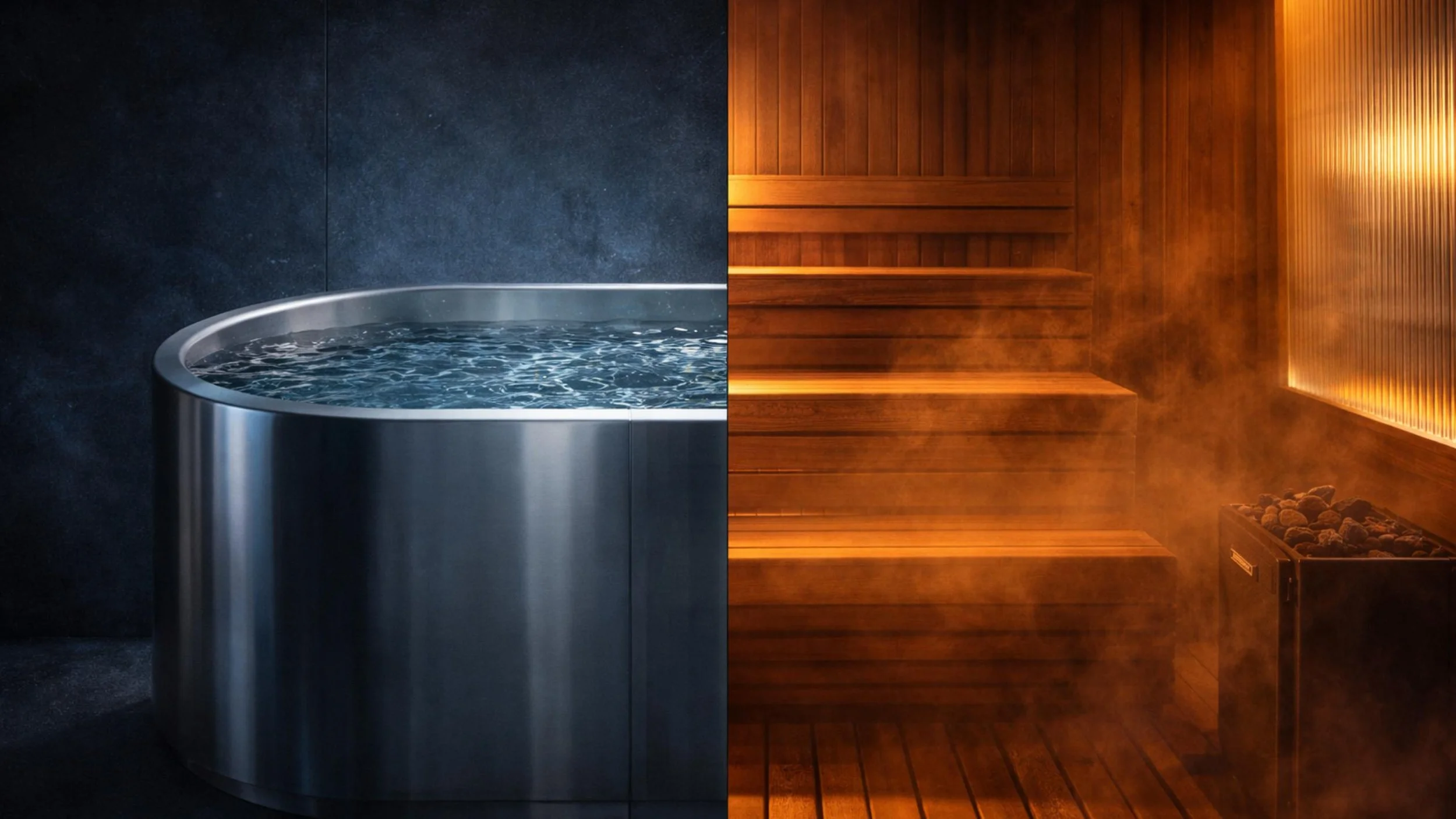
The debate around ice bath vs sauna for muscle recovery has divided athletes, coaches, and researchers for years. Both methods are backed by science. Both deliver measurable results. But they work through entirely different mechanisms, on entirely different timelines.
So which one actually works faster? And more importantly, which one is right for your training goals, your schedule, and your body? The answer isn't as simple as picking the one that feels better. It depends on what's happening beneath the surface — at the level of blood flow, inflammation, hormones, and cellular repair.
This guide breaks down the science behind cold water immersion vs sauna therapy, compares them head to head, and gives you a practical framework to use both strategically for maximum recovery.
How Ice Baths Accelerate Muscle Recovery
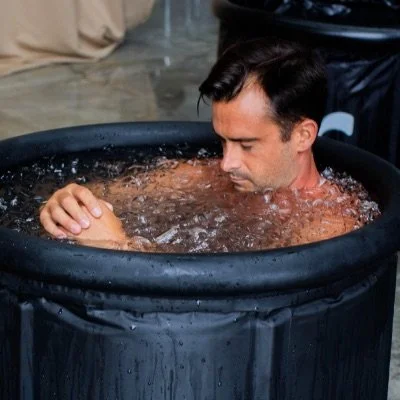
Cold water immersion — typically between 2°C and 10°C — triggers a cascade of physiological responses designed to protect your body from the perceived threat of extreme cold. This isn't just about numbing sore muscles. It's a systemic intervention that influences everything from your nervous system to your inflammatory markers.
The Mechanism: Vasoconstriction and Inflammation Control
When you submerge yourself in cold water, your blood vessels constrict rapidly. This vasoconstriction reduces blood flow to the extremities and muscles, which limits the accumulation of metabolic waste products and dampens the inflammatory response that follows intense exercise.
This is critical in the first few hours after training. Exercise-induced muscle damage triggers an inflammatory cascade — it's a natural part of the repair process, but excessive inflammation delays recovery, increases soreness, and can compromise your next session. Ice bath muscle recovery works by modulating this response, not eliminating it.
Norepinephrine and the Nervous System Reset
Cold exposure drives a significant spike in norepinephrine — up to 200-300% above baseline according to research published in the European Journal of Applied Physiology. This neurotransmitter sharpens focus, elevates mood, and reduces the perception of pain. It's one reason you feel extraordinarily alert and energised after a cold plunge, even when your muscles are fatigued.
The parasympathetic activation that follows cold immersion also helps shift your nervous system out of the fight-or-flight state that high-intensity training induces. You recover not just muscularly, but neurologically.
When Ice Baths Work Best
Ice baths deliver their most powerful recovery benefits in acute scenarios — immediately after high-intensity or high-volume sessions where rapid inflammation control is the priority. Think tournament days, back-to-back training sessions, or competition phases where performance tomorrow matters more than long-term adaptation.
How Sauna Heat Therapy Supports Muscle Recovery
Sauna therapy operates on the opposite end of the thermal spectrum, but the goal is the same — faster, more complete recovery. Traditional Finnish saunas (80-100°C) and infrared saunas (45-65°C) both deliver meaningful benefits, though through slightly different pathways.
The Mechanism: Vasodilation and Blood Flow Enhancement
Heat exposure causes vasodilation — your blood vessels expand, increasing blood flow to damaged muscle tissue. This enhanced circulation delivers oxygen, nutrients, and immune cells directly to the sites that need repair. It also accelerates the removal of metabolic byproducts like lactate and creatine kinase.
Sauna muscle recovery is fundamentally a delivery system. Where cold restricts and controls, heat opens and nourishes. The increased blood flow supports the natural repair process rather than modulating it.
Heat Shock Proteins and Cellular Repair
One of the most compelling mechanisms behind sauna therapy is the upregulation of heat shock proteins (HSPs), particularly HSP70 and HSP72. These molecular chaperones play a direct role in repairing damaged proteins, preventing muscle atrophy, and stimulating the synthesis of new muscle tissue.
"Heat shock proteins act as a cellular defence system — they refold damaged proteins and protect muscle cells from further stress. Regular heat exposure essentially teaches your body to repair itself more efficiently." — Journal of Applied Physiology , 2015
"Heat shock proteins act as a cellular defence system — they refold damaged proteins and protect muscle cells from further stress. Regular heat exposure essentially teaches your body to repair itself more efficiently." — Journal of Applied Physiology, 2015
This cellular repair mechanism is particularly valuable during hypertrophy phases or periods of heavy training where muscle protein synthesis is paramount.
Growth Hormone and Hormonal Response
Sauna use has been shown to elevate growth hormone levels substantially. A study published in the Journal of Clinical Endocrinology and Metabolism found that two 20-minute sauna sessions at 80°C, separated by a brief cooling period, increased growth hormone by up to 200-300%. Growth hormone is a key driver of tissue repair, muscle growth, and fat metabolism — all essential components of recovery.
When Sauna Works Best
Sauna therapy excels in the hours after training when the acute inflammatory response has subsided and your body shifts into repair mode. It's also profoundly effective for recovery on rest days, where the goal is to enhance blood flow and nutrient delivery without adding physical stress. For athletes in building phases who want to maximise adaptation rather than suppress it, heat therapy is often the superior choice.
Ice Bath vs Sauna for Muscle Recovery: The Head-to-Head Comparison
Understanding the mechanisms is one thing. Seeing them side by side is where the real clarity emerges. Here's how cold therapy vs heat therapy stacks up across the key recovery metrics that matter to serious athletes.
The data makes one thing clear: if your only goal is to reduce soreness as fast as possible before your next session, cold water immersion wins on speed. But if your goal is to maximise the long-term adaptive response — building more muscle, getting stronger, recovering more completely — sauna therapy has a distinct advantage.
| Recovery Factor | Ice Bath (Cold Water Immersion) | Sauna (Heat Therapy) |
|---|---|---|
| Primary mechanism | Vasoconstriction, inflammation control | Vasodilation, blood flow enhancement |
| Speed of soreness relief | Fast — noticeable within hours | Moderate — peaks over 24-48 hours |
| Muscle protein synthesis | May blunt if used immediately post-training | Supports via heat shock proteins and growth hormone |
| Nervous system recovery | Strong parasympathetic activation | Moderate relaxation response |
| Hormonal response | Norepinephrine spike (200-300%) | Growth hormone surge (up to 200-300%) |
| Best timing | Immediately post-session (0-2 hours) | 2+ hours post-session or rest days |
| Ideal training phase | Competition, tournament, deload | Hypertrophy, building, general fitness |
| Risk of blunting adaptation | Moderate — if overused during building phases | Low |
The Adaptation Trade-Off: Why Faster Isn't Always Better
Here's the nuance most people miss in the ice bath vs sauna debate. Inflammation isn't just damage — it's a signal. The inflammatory response triggered by resistance training is what tells your body to rebuild stronger. Suppress that signal too aggressively, too often, and you risk blunting the very adaptations you're training for.
The Cold Water Immersion Caveat
A landmark 2015 study in the Journal of Physiology found that regular cold water immersion after resistance training reduced long-term gains in muscle mass and strength compared to active recovery. The cold effectively dampened the satellite cell activity and mTOR signalling pathways responsible for muscle hypertrophy.
Strength gain reduction (CWI vs active recovery)
~29%
Muscle mass gain reduction
~19%
Study duration
12 weeks
Muscle strength gains after 12 weeks (leg press 1RM, % increase)
Leg press 1RM percentage improvement from baseline across 12-week resistance training programme.
Muscle mass gains after 12 weeks (type II fibre cross-sectional area, % increase)
Type II muscle fibre cross-sectional area percentage change from baseline. CWI blunted hypertrophic signalling via reduced satellite cell activity and mTOR pathway suppression.
When to use cold vs heat: context guide
Ice bath: use when
Competition phase
Repeated performance in 24hrs
Endurance or cardio training
Tournament or deload blocks
Sauna: use when
Hypertrophy or building phase
Maximising strength adaptation
Rest days or general fitness
Post resistance training sessions
Based on Fyfe et al., 2015. Journal of Physiology. Neither modality is superior — context and training phase determine optimal use.
This doesn't mean ice baths are bad. It means timing and context matter. During a competition phase, when you need to perform again in 24 hours or less, controlling inflammation is the priority. During a hypertrophy block, when you want maximum adaptation from every session, cold immersion immediately post-training may be counterproductive.
Heat Therapy's Adaptation Advantage
Sauna use doesn't carry the same trade-off. Heat shock proteins support — rather than suppress — the adaptive process. Growth hormone elevation further amplifies muscle repair and synthesis. This makes sauna therapy an ideal companion to strength and hypertrophy training, where the goal is building, not just recovering.
For athletes who want the best of both worlds, the answer lies in strategic timing rather than choosing one modality over the other.
Contrast Therapy: Combining Cold and Heat for Maximum Recovery
If you've been framing this as an either-or decision, there's a third option that elite athletes have used for decades. Contrast therapy recovery alternates between cold and heat exposure, leveraging the benefits of both vasoconstriction and vasodilation in a single session.
How Contrast Therapy Works
The alternation between cold and hot creates a "pumping" effect on your vascular system. Blood vessels constrict in the cold, then dilate in the heat, then constrict again. This rhythmic cycle accelerates the removal of metabolic waste while simultaneously flooding damaged tissue with nutrient-rich blood. The result is a recovery stimulus that's greater than either modality alone.
A Practical Contrast Therapy Protocol
A well-structured contrast therapy session looks like this:
Start with heat. Spend 10-15 minutes in the sauna at 80-90°C to elevate core temperature and open blood vessels.
Transition to cold. Immerse in your ice bath at 3-6°C for 2-3 minutes. Focus on controlled breathing.
Repeat. Complete 3-4 rounds, always ending on cold if your goal is alertness and reduced inflammation, or on heat if your goal is relaxation and sleep.
Rest. Spend 10 minutes in a neutral environment, allowing your body to self-regulate.
This protocol is particularly effective on heavy training days, after competitions, and during intensified training blocks where recovery demand outpaces your body's natural capacity.
Who Benefits Most From Contrast Therapy
Contrast therapy is ideal for athletes training at high volumes or frequencies — team sport athletes with multiple sessions per week, endurance athletes in peak blocks, and strength athletes managing accumulated fatigue. It's also a powerful tool for anyone who finds that cold alone or heat alone isn't delivering sufficient recovery.
Frequently Asked Questions
Is an ice bath or sauna better immediately after a workout?
It depends on your training goal. If you need to recover fast for another session within 24 hours — such as during a tournament or double-day training — an ice bath immediately post-workout is more effective for rapid soreness reduction. If you're in a building phase and want to maximise muscle growth and strength adaptation, a sauna 2-3 hours after training is the better choice. The ice bath works faster for perceived recovery, but the sauna supports deeper, long-term repair processes without blunting adaptation signals.
Can cold water immersion reduce muscle gains?
Yes, when used chronically and immediately after resistance training. Research has shown that regular post-workout cold water immersion can attenuate muscle protein synthesis, satellite cell activation, and key anabolic signalling pathways. This doesn't mean you should avoid ice baths entirely — it means you should reserve them for periods where rapid recovery matters more than maximal adaptation, such as competition phases or deload weeks.
How long should I stay in an ice bath for muscle recovery?
Most research supports 6-15 minutes of immersion at water temperatures between 2°C and 10°C. Shorter durations at colder temperatures can be equally effective. The key is achieving sufficient core temperature drop to trigger vasoconstriction and norepinephrine release without excessive cold stress. Start with 2-3 minutes if you're new to cold immersion and gradually increase your tolerance over time.
Does sauna use help with delayed onset muscle soreness (DOMS)?
Yes. Sauna therapy has been shown to reduce the severity and duration of DOMS through increased blood flow, heat shock protein activation, and enhanced nutrient delivery to damaged muscle fibres. A 15-20 minute sauna session on rest days or the evening after training can meaningfully reduce soreness and improve readiness for your next session.
Can I use both an ice bath and sauna on the same day?
Absolutely. Contrast therapy — alternating between cold and heat exposure — is one of the most effective recovery strategies available. The key is sequencing. For post-training recovery, start with heat to promote blood flow, then transition to cold to control inflammation. Repeat for 3-4 rounds. Many elite athletes incorporate contrast therapy as a cornerstone of their weekly recovery routine, particularly during high-demand training phases.
Final Thoughts
The question of ice bath vs sauna for muscle recovery isn't about declaring a single winner. It's about understanding which tool serves your current training demands and deploying it with precision. Cold water immersion delivers faster perceived recovery and acute inflammation control. Sauna therapy supports deeper cellular repair, hormonal optimisation, and long-term adaptation. Contrast therapy combines both for a recovery stimulus that exceeds either modality alone.
The athletes who recover fastest aren't the ones who pick a side. They're the ones who use both strategically — cold when speed matters, heat when adaptation matters, and contrast when maximum recovery is non-negotiable.
At Ritual Recovery, we build premium ice baths, chillers, and recovery equipment for athletes who take recovery as seriously as they take training. Because the work you do after the session determines how hard you can go in the next one. And the quality of your tools determines the quality of your recovery.