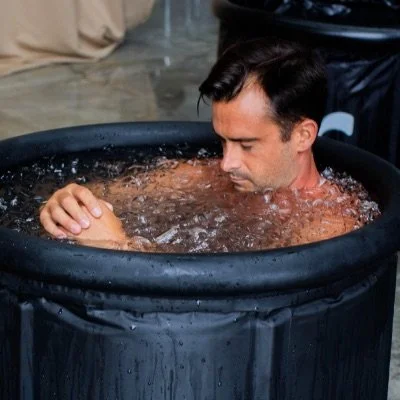
Ice Bath Benefits for Older Adults: Joint Health After 50
Your knees ache before you even get out of bed. Your shoulders feel stiff for the first hour of every morning. The garden work you used to breeze through now leaves your hands swollen and your lower back locked up for days. You are not broken. You are dealing with the reality of joints that have carried you for more than five decades.
The ice bath benefits for older adults are not about chasing some extreme wellness trend — they are about reclaiming the movement, comfort, and quality of life that chronic inflammation has been quietly stealing from you.
Cold water immersion has been used in clinical and athletic settings for decades. But the conversation has been dominated by elite athletes and biohackers in their twenties. That is starting to change.
A growing body of research now supports cold therapy after 50 as a practical, accessible tool for managing joint pain, reducing systemic inflammation, and improving daily function without adding another prescription to the pile.
This is not about suffering through freezing water for bragging rights. This is about a deliberate, evidence-based protocol that works with your body — not against it — to address the specific challenges that come with ageing joints.
Why Joint Health Changes After 50
To understand why cold water immersion works so well for older adults, you first need to understand what is actually happening inside your joints as you age.
The Cartilage Problem
After the age of 50, articular cartilage — the smooth, protective tissue that cushions the ends of your bones — begins to thin and lose its capacity to regenerate.
Synovial fluid, the natural lubricant inside your joint capsules, decreases in both volume and viscosity. The result is more friction, more irritation, and a low-grade inflammatory response that becomes your new baseline.
This is not an injury. It is a gradual shift. But the downstream effects are significant: morning stiffness, reduced range of motion, swelling after moderate activity, and a creeping reluctance to move that only accelerates the problem.
Chronic Low-Grade Inflammation
Researchers now use the term "inflammageing" to describe the persistent, systemic inflammation that accompanies getting older. Elevated levels of pro-inflammatory cytokines — including interleukin-6 (IL-6) and tumour necrosis factor alpha (TNF-α) — circulate at higher concentrations in adults over 50, even without acute injury or illness.
This is not the helpful inflammation that repairs a sprained ankle. This is a slow burn that degrades connective tissue, sensitises nerve endings, and makes your joints feel worse than they structurally need to.
Addressing this inflammation is one of the most impactful things you can do for your joint health — and it is exactly where cold therapy excels.
The Science Behind Ice Bath Benefits for Older Adults
Cold water immersion triggers a cascade of physiological responses that are particularly valuable for ageing bodies. The mechanisms are well-documented, and they align precisely with the challenges older adults face.
Vasoconstriction and Inflammation Reduction
When you immerse yourself in cold water, your blood vessels constrict rapidly. This reduces blood flow to superficial tissues and joints, limiting the accumulation of inflammatory metabolites in swollen areas. Upon exiting the water, the subsequent vasodilation flushes fresh, oxygenated blood back through those tissues.
This pump-like effect is not just a temporary relief mechanism. Repeated exposure has been shown to lower baseline levels of inflammatory markers. A 2022 study published in the International Journal of Environmental Research and Public Health found that regular cold water immersion significantly reduced circulating IL-6 levels in middle-aged and older participants over a six-week period.
Pain Gate Modulation
Cold exposure activates A-delta nerve fibres, which transmit signals faster than the C-fibres responsible for chronic, dull joint pain. This effectively "closes the gate" on pain perception — a principle well-established in pain science. For older adults living with osteoarthritis or degenerative joint conditions, even a brief cold immersion can provide meaningful analgesic relief lasting several hours.
Norepinephrine and Mood
Cold water immersion stimulates a significant release of norepinephrine — a neurotransmitter involved in attention, mood, and pain modulation. Studies have shown increases of 200 to 300 percent following immersion at temperatures between 4°C and 14°C.
For older adults dealing with the frustration and low mood that often accompany chronic pain, this neurochemical benefit is far from trivial.
"The most compelling aspect of cold water immersion for older populations is not any single mechanism — it is the convergence of anti-inflammatory, analgesic, and neuroendocrine effects in a single, drug-free intervention."
"The most compelling aspect of cold water immersion for older populations is not any single mechanism — it is the convergence of anti-inflammatory, analgesic, and neuroendocrine effects in a single, drug-free intervention."
Cold Therapy and Arthritis: What the Research Shows
Arthritis affects more than 3.6 million Australians, and the prevalence climbs steeply after 50. If you are exploring cold therapy for arthritis management, the evidence is encouraging — though it requires nuance.
Osteoarthritis
Osteoarthritis (OA) is the most common form, driven by cartilage degradation and the resulting inflammatory response. Cold water immersion addresses the inflammation and pain components directly.
A systematic review in Rheumatology International concluded that cryotherapy — including cold water immersion — produced significant short-term improvements in pain, stiffness, and physical function for OA patients.
Importantly, cold therapy does not interfere with the limited cartilage repair mechanisms your body still has. Unlike non-steroidal anti-inflammatory drugs (NSAIDs), which carry gastrointestinal and cardiovascular risks with long-term use, cold water immersion achieves localised and systemic inflammation reduction without pharmacological side effects.
Rheumatoid Arthritis
Rheumatoid arthritis (RA) is an autoimmune condition, and cold therapy must be approached more carefully. However, research on whole-body cryotherapy and cold water immersion in RA patients has shown reductions in joint swelling and pain scores, particularly when used as a complement to existing treatment protocols. If you have RA, consult your rheumatologist before beginning any cold immersion routine — but do not assume it is off the table.
Ice Bath Joint Health: A Comparison of Common Interventions
Cold water immersion sits in a unique position: meaningful inflammation control and pain relief with an exceptionally low risk profile. For older adults managing joint conditions long-term, that trade-off matters enormously.
Building a Safe Ice Bath Protocol After 50
The biggest mistake older adults make with cold water immersion is treating it like an endurance test. It is not. The goal is a therapeutic dose — enough cold exposure to trigger the beneficial physiological responses without overwhelming your cardiovascular system or causing unnecessary stress.
Temperature Guidelines
Forget the 2°C plunges you see on social media. For cold water immersion seniors can sustain safely and consistently, start warmer and progress gradually.
· Weeks 1–2: 15°C to 18°C for 2 to 3 minutes
· Weeks 3–4: 12°C to 15°C for 3 to 5 minutes
· Weeks 5 onwards: 8°C to 12°C for 4 to 8 minutes (based on tolerance)
Consistency matters more than intensity. Three sessions per week at a moderate temperature will outperform one brutal session followed by a week of avoidance.
| Intervention | Inflammation Reduction | Pain Relief Duration | Long-Term Side Effects | Drug-Free |
|---|---|---|---|---|
| Cold Water Immersion | 2–6 hours | Minimal (when used correctly) | Yes | |
| NSAIDs (Oral) | 4–8 hours | GI bleeding, cardiovascular risk | No | |
| Topical Anti-Inflammatories | 2–4 hours | Skin irritation | No | |
| Heat Therapy | 1–3 hours | Minimal | Yes | |
| Corticosteroid Injection | Weeks to months | Cartilage thinning, infection risk | No |
Cold water immersion is the only intervention that combines meaningful inflammation reduction, zero drug dependency, and minimal long-term risk — when practised consistently and correctly.
Timing Your Sessions
For joint health specifically, the most effective timing is after physical activity — a walk, a gym session, gardening, or any movement that leaves your joints feeling warm and slightly aggravated. Post-activity cold immersion capitalises on the window when inflammatory mediators are most elevated in your joint tissues.
Morning sessions can also be valuable for reducing the stiffness that accumulates overnight. If morning stiffness is your primary complaint, experiment with a brief immersion within 30 minutes of waking.
Entry and Exit Safety
Practical safety is non-negotiable. Ensure your ice bath setup allows for easy entry and exit. A stable step or platform, non-slip surfaces, and grab rails if needed. Never rush into or out of the water.
The cold shock response — the involuntary gasp and spike in heart rate upon initial immersion — is more pronounced in older adults and those new to cold exposure. Enter slowly, control your breathing, and give your body 30 to 60 seconds to adapt before settling in.
What to Monitor
Blood pressure: Cold immersion causes a temporary spike in blood pressure. If you have uncontrolled hypertension, get clearance from your GP first.
Skin colour: Healthy cold exposure turns skin pink. If you notice white or blue patches, exit immediately.
Numbness: Mild tingling is normal. Complete numbness in extremities means you have stayed too long or the water is too cold.
Post-session warmth: You should feel warm and alert within 10 to 15 minutes of exiting. Prolonged shivering suggests you need a shorter duration or warmer temperature.
When to Avoid Cold Water Immersion
Cold therapy after 50 is broadly safe, but it is not universally appropriate. You should avoid cold water immersion or seek medical advice first if you have any of the following:
Uncontrolled hypertension or a history of heart attack or stroke
Raynaud's disease or cold urticaria
Open wounds or active skin infections
Peripheral neuropathy that impairs your ability to sense temperature
A current acute flare of rheumatoid arthritis (without specialist guidance)
If you are on blood pressure medication or blood thinners, a quick conversation with your doctor is worthwhile — not because cold immersion is inherently dangerous, but because understanding your individual risk factors allows you to use it with full confidence.
Frequently Asked Questions
Is cold water immersion safe for seniors with osteoarthritis?
Yes, for the majority of older adults with osteoarthritis, cold water immersion is both safe and beneficial. Research consistently shows improvements in pain, stiffness, and physical function. Start with warmer temperatures and shorter durations, and progress at a pace that feels manageable. If you have other significant health conditions, consult your GP before starting.
How cold does the water need to be to get ice bath benefits for older adults?
You do not need extreme cold to trigger meaningful physiological benefits. Water temperatures between 10°C and 15°C are sufficient to activate vasoconstriction, reduce inflammatory markers, and stimulate norepinephrine release. Many older adults find their therapeutic sweet spot between 10°C and 14°C — cold enough to be effective, manageable enough to sustain consistently.
How often should someone over 50 take ice baths for joint health?
Three to four sessions per week is the range most supported by research for chronic inflammation management. Some people benefit from daily immersion at milder temperatures. The key principle is regularity. Sporadic use produces sporadic results. Build it into your weekly routine the way you would any other form of physical therapy or exercise.
Can cold water immersion replace my arthritis medication?
Cold water immersion should be viewed as a complementary tool, not a replacement for prescribed medication. That said, many older adults find that consistent cold therapy reduces their reliance on over-the-counter painkillers and anti-inflammatories over time. Any changes to your medication should be discussed with your prescribing doctor.
What is better for arthritis — ice baths or heat therapy?
Both have value, but they serve different purposes. Heat therapy relaxes muscles and increases blood flow, which can help with morning stiffness. Cold therapy is superior for reducing active inflammation and swelling. Many older adults find the best results by using heat to loosen up before activity and cold immersion after activity to manage the inflammatory response. They are not mutually exclusive.
Final Thoughts
Getting older does not mean accepting that your joints will dictate what you can and cannot do. The ice bath benefits for older adults are real, well-documented, and increasingly accessible — not just to elite athletes, but to anyone willing to adopt a consistent, sensible protocol.
Cold water immersion addresses the root drivers of age-related joint discomfort: chronic inflammation, pain sensitisation, and reduced circulation. It does this without the side effects that come with long-term pharmaceutical use.
And when paired with movement, good nutrition, and quality sleep, it becomes one of the most powerful tools in your recovery arsenal.
The difference between a difficult experience and an effective one often comes down to equipment. A purpose-built ice bath with precise temperature control — like the systems designed by Ritual Recovery — removes the guesswork and inconsistency that derails most home cold therapy attempts. When the temperature is reliable, the experience is repeatable. When the experience is repeatable, the results compound.
Your joints have carried you this far. Give them the recovery they have earned.