Ice Bath vs Sauna for Sleep: Which Helps You Sleep Deeper
You train hard. You eat well. You still wake up at 2am. The missing variable might not be another supplement or a new mattress. It might be temperature.
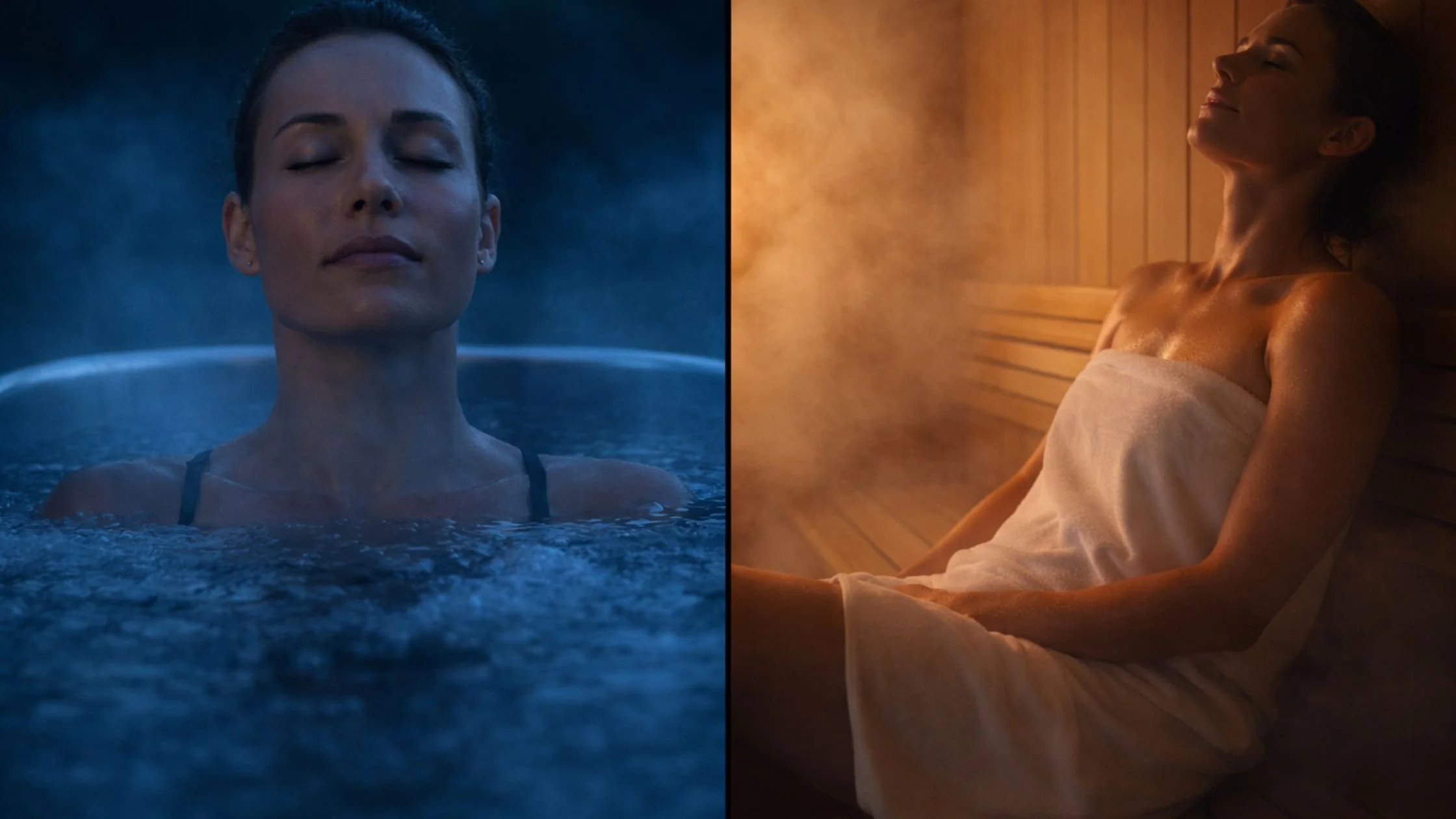
Both cold water immersion and sauna exposure influence sleep architecture through thermal mechanisms.
Both have peer-reviewed evidence behind them. And both are widely misused, either timed wrong, dosed wrong, or applied to the wrong problem.
Here is what the research actually shows about cold plunges, saunas, and sleep quality, including where the original article on this topic got it wrong, and what the controlled studies say instead.
How Temperature Governs Sleep Onset
Sleep is not simply a matter of feeling tired. It is a physiological process gated by your core body temperature. Your circadian rhythm follows a predictable thermal curve: core temperature rises through the morning, peaks in the late afternoon around 37.5-38 degrees Celsius, then declines through the evening.
Sleep onset is tightly coupled to this decline. Research by Kräuchi and Deboer has established that the maximal rate of decline in core body temperature, driven by heat dissipation from the periphery, is one of the most consistent predictors of sleep propensity. When skin temperature in the hands and feet rises relative to the trunk (the distal-proximal skin temperature gradient), blood is moving heat toward the surface for dissipation. This peripheral warming signal is strongly associated with accelerated sleep onset.
Both ice baths and saunas exploit this mechanism, but they arrive at the same outcome from opposite directions. Understanding the distinction is what separates a protocol that works from one that backfires.
The sauna pathway
Sauna exposure raises core temperature significantly, typically by 1-2 degrees Celsius over a 15-20 minute session at 80-100 degrees. When you exit, your body triggers aggressive thermoregulatory cooling: vasodilation, sweating, and peripheral blood flow all increase to dump heat. Core temperature overshoots its normal baseline, producing a lower thermal set point heading into the evening.
A landmark 2019 meta-analysis by Haghayegh et al. (Sleep Medicine Reviews) examined passive body heating across 17 studies and found that warm water bathing or sauna exposure 1-2 hours before bed significantly shortened sleep onset latency and improved overall sleep efficiency. The mechanism is what they described as thermal facilitation: by artificially accelerating the pre-sleep core temperature drop, heat exposure aligns your body's thermal state with its sleep drive earlier in the evening.
Finnish research adds population-level evidence. The 2024 MONICA study of sauna bathers in northern Sweden found that regular sauna users reported significantly better sleep satisfaction and reduced sleep disturbance versus non-bathers. A separate review by Laukkanen and Kunutsor (Temperature, 2024) cited a study by Putkonen and Elomaa in which post-sauna deep sleep (slow-wave sleep) increased by over 70% during the first two hours of the subsequent night, with the effect persisting at 45% across the first six hours.
The cold exposure pathway
Cold water immersion works differently. Rather than heating and then cooling, it directly lowers core temperature below baseline. Robey et al. (2013, Med Sci Sports Exerc) demonstrated using polysomnography that post-exercise CWI decreased core temperature for approximately 90 minutes after immersion. Critically, they also found that whole-night sleep architecture was not significantly altered by this strategy in trained cyclists. The core temperature effect was real; the downstream sleep architecture benefit was less clear.
More recent work has found conditional benefits. Chauvineau et al. (2021, Frontiers in Sports and Active Living) tested whole-body versus partial-body CWI following high-intensity running and found that whole-body immersion, head included, reduced arousal and limb movement and enhanced slow-wave sleep proportion during the first part of the night. The key distinction from the Robey study was immersion depth and the greater core temperature reduction achieved with whole-body submersion.
A 2025 systematic review by Galvez-Rodriguez et al. found that CWI after exercise significantly boosted parasympathetic tone in the majority of studies examined, with eight of twelve studies showing moderate to large effect sizes versus passive recovery. This parasympathetic rebound is the physiological mechanism that supports the shift toward restorative sleep.
The honest summary: cold water immersion can improve sleep onset conditions when timed correctly, particularly for athletes managing elevated inflammatory and sympathetic load from training. The evidence is less consistent than the sauna literature, and more sensitive to timing.
Temperature is your most underrated sleep tool
The protocol only works if the temperature is precise.
A 10-degree variance in your cold plunge is the difference between a therapeutic stimulus and a tepid bath. Ritual Recovery ice baths hold their target temperature in the Australian climate, session after session, so your recovery protocol does what the research says it should.
Shop Ice Baths →Free shipping Australia-wide
Ice Bath vs Sauna for Sleep: Direct Comparison
The table below compares both modalities across the metrics that matter most for sleep quality, drawing on available peer-reviewed data.
| Ice bath vs sauna for sleep — mechanism and protocol comparison | |||
|---|---|---|---|
| Metric | Ice Bath (CWI) | Sauna | Source |
| Primary sleep mechanism | Direct core temp reduction below baseline | Thermoregulatory overshoot after heat | Same endpoint, different routes |
| Optimal timing before bed | 90–120 min | 60–90 min | Haghayegh et al. 2019 |
| Effect on sleep onset latency | Reduces when timed correctly | Consistently reduces (17-study meta-analysis) | Sauna has stronger consistent evidence |
| Effect on deep (slow-wave) sleep | Enhanced in first 3h with whole-body immersion | Up to 70% increase in first 2h post-session | Putkonen and Elomaa; Chauvineau et al. 2021 |
| Parasympathetic activation | Strong post-immersion rebound (8 of 12 studies, moderate-large effect) | Gradual post-session shift | Galvez-Rodriguez et al. 2025 |
| Avoid zone before bed | Within 60 min | Within 30 min | Acute sympathetic activation delays sleep onset |
| Best for | Athletes with high training load. Stricter timing required. | Most people. More forgiving window. Strongest consistent evidence. | Individual response varies |
Sources: Haghayegh et al. 2019 (Sleep Med Rev, 17-study meta-analysis); Putkonen and Elomaa (sauna deep sleep, Finnish research); Chauvineau et al. 2021 (Front Sports Act Living, polysomnography); Robey et al. 2013 (Med Sci Sports Exerc); Galvez-Rodriguez et al. 2025. Individual results vary with timing, immersion depth, and hydration status.
The Mechanism That Resolves the Debate
The reason both modalities work is that they converge on the same endpoint: a lower core body temperature at sleep onset than would otherwise occur naturally. This is the insight the original version of this article got right, and it is worth understanding clearly.
The sauna heats you up so your body aggressively cools you down, overshooting your baseline. The ice bath cools you directly, lowering your thermal set point before the cooling signal would naturally arrive. Either way, your suprachiasmatic nucleus interprets the falling core temperature as a green light for melatonin release and sleep initiation.
Where the modalities differ is in the strength and consistency of the evidence, the timing requirements, and the secondary effects that accompany each.
The sauna literature is more consistent across study designs and populations. The passive body heating meta-analysis by Haghayegh et al. is the most robust available evidence for temperature-based sleep improvement, and it points clearly to heat as the more reliable tool for most people. The cold exposure literature shows real benefits in athlete populations managing high training loads, but the results are more variable and more sensitive to protocol specifics.
Practical Protocol: How to Time Each Modality for Sleep
Sauna for sleep
The consistent finding across the literature is that finishing your sauna session 60-90 minutes before your target sleep time produces the most reliable improvement in sleep onset latency. This window allows the thermoregulatory cooling response to fully develop before you lie down.
Temperature: 80-100 degrees Celsius traditional sauna
Duration: 15-20 minutes per session
Timing: finish 60-90 minutes before bed
Hydration: 500ml of water with electrolytes post-session. Dehydration is the primary reason sauna users report fragmented sleep after sessions
Avoid immediately before bed: residual elevated core temperature within 30 minutes of sleep disrupts rather than supports onset
Cold plunge for sleep
The timing requirement for cold exposure is stricter. The acute sympathetic activation from immersion, which includes elevated norepinephrine, elevated heart rate, and cortisol response, takes 60-120 minutes to fully resolve. If you plunge too close to sleep, you are getting into bed while your nervous system is still in its stress-response phase.
Temperature: 10-15 degrees Celsius. Colder is not better for sleep purposes; extreme cold below 5 degrees extends the sympathetic activation window
Duration: 2-5 minutes
Timing: finish at least 90-120 minutes before bed
Whole-body submersion produces a stronger core temperature reduction and appears to have more benefit for sleep architecture than partial immersion (Chauvineau et al. 2021)
Morning and early afternoon cold plunges avoid the timing issue entirely and still deliver the downstream HRV and parasympathetic benefits that improve next-night sleep quality over time
Contrast therapy for sleep
Alternating between heat and cold in the same session creates the strongest combined thermoregulatory stimulus. The critical rule for sleep optimisation is to finish on cold, ensuring core temperature is trending downward heading into the evening rather than rebounding from heat.
A practical evening contrast protocol: 15-20 minutes sauna, 2-3 minutes cold at 10-15 degrees, 10 minutes sauna, 2 minutes cold to finish. Allow 90 minutes of quiet wind-down before bed. This delivers the deep sleep priming of post-sauna core temperature decline, combined with the parasympathetic rebound of post-immersion recovery.
Research by Mantysaari et al. 2021 found that contrast therapy produced higher HRV than sauna-only sessions, suggesting an additive effect on autonomic recovery.
A 2024 paper in Cell Reports Medicine by Soberg et al. on winter swimmers (who typically alternate cold dips with sauna) found enhanced cold-induced thermogenesis and altered brown adipose tissue regulation in experienced practitioners, suggesting long-term contrast exposure reshapes thermoregulatory capacity beyond what either modality achieves alone.
Individual Variation and Tracking Your Response
Not everyone responds identically to either modality. Some people find cold immersion stimulating enough in the evening that even a two-hour buffer is insufficient. For those individuals, morning cold plunges and evening sauna is the most practical protocol. Others find post-sauna heat makes them feel overheated and restless, particularly if they do not hydrate adequately or push sessions too long.
The most useful tool for dialling in your personal response is a sleep tracker with accurate HRV and sleep stage data. Two weeks of consistent data will tell you more about your individual response to timing and temperature than any population study. Log your sessions, note your sleep scores, and adjust accordingly.
Related: EMF in the bedroom: what it is, how to measure it, and whether it’s affecting your sleep
Look specifically for: deep sleep duration in the first three hours of the night, sleep onset latency, overnight HRV trend, and next-morning readiness score. These four metrics give you the clearest signal of whether your evening temperature protocol is working.
Frequently Asked Questions
Is an ice bath or sauna better for sleep?
For most people, sauna has more consistent evidence behind it for sleep quality improvement. The Haghayegh et al. 2019 meta-analysis across 17 studies provides the most robust support for passive heat therapy timed 60-90 minutes before bed. Cold water immersion can be equally effective for athletes managing high training loads, but requires stricter timing discipline and whole-body submersion for the strongest sleep architecture benefit.
How long before bed should I take a cold plunge?
At least 90 minutes, and ideally 120 minutes. The acute sympathetic activation from cold immersion takes 60-90 minutes to fully resolve into the parasympathetic rebound that supports sleep. Plunging within 30-60 minutes of bed is likely to delay sleep onset rather than improve it.
Does sauna improve deep sleep specifically?
Yes, with the strongest evidence pointing to increased slow-wave (deep) sleep in the early part of the night. Putkonen and Elomaa found sauna increased deep sleep by over 70% in the first two hours post-session. The mechanism is the accelerated core temperature decline following heat exposure, which deepens the initiation of slow-wave sleep phases.
Can a cold plunge before bed hurt my sleep?
Yes, if timed too close to sleep. The norepinephrine surge and sympathetic activation from cold immersion takes time to clear. A cold plunge within 30-60 minutes of lying down is likely to increase alertness and delay sleep onset. The sleep benefit from cold exposure is real, but it arrives after the stress response resolves, not during it.
Should I end contrast therapy on hot or cold for better sleep?
End on cold. Finishing with a brief cold immersion ensures your core temperature is declining heading into the evening rather than rebounding from residual heat. Allow at least 90 minutes between your final cold immersion and sleep for the full thermoregulatory benefit to develop.
How do I know if my temperature protocol is improving my sleep?
Track your sleep with a wearable that measures HRV and sleep stages. Monitor deep sleep duration in the first three hours, sleep onset latency, and next-morning readiness or HRV score consistently over two weeks. Oura Ring 4 and Samsung Galaxy Ring are both validated for overnight HRV tracking and provide the sleep stage granularity needed to detect meaningful changes.
Final Thoughts
Ice bath vs sauna for sleep is not a competition. Both modalities improve sleep through the same downstream mechanism: a lower core body temperature at sleep onset that deepens the initiation of slow-wave sleep and shortens the time to fall asleep. The sauna heats you up so your body cools you down. The cold plunge cools you directly. The endpoint is the same.
The practical difference is consistency of evidence and timing tolerance. The sauna literature is broader and more consistent across populations. Cold water immersion benefits are real but more variable, more timing-sensitive, and more dependent on immersion depth. For most people, evening sauna with a 60-90 minute wind-down window is the more reliable starting point. For athletes using cold immersion as a primary recovery tool, morning or early afternoon sessions avoid the timing problem entirely while still delivering cumulative sleep quality improvements over time.
The protocol that works is the one you execute consistently. That requires equipment that removes friction. An ice bath that holds precise temperature session after session. A sauna that reaches and maintains target heat without warm-up guesswork. At Ritual Recovery, that is what we build.
The protocol only works if you show up consistently
Better sleep takes weeks to build. Make it effortless to repeat.
The thermoregulatory benefits in this article compound over two to four weeks of consistent practice. That only happens with a setup that removes every excuse not to plunge. Ritual Recovery ice baths are engineered to hold precise temperature in the Australian climate, session after session, so the stimulus is real every time.
Shop Ice Baths →Free shipping Australia-wide