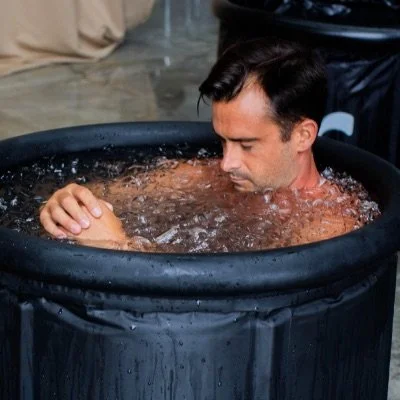
Best Sleep Trackers for Cold Plunge and Sauna Recovery (Australia 2026)
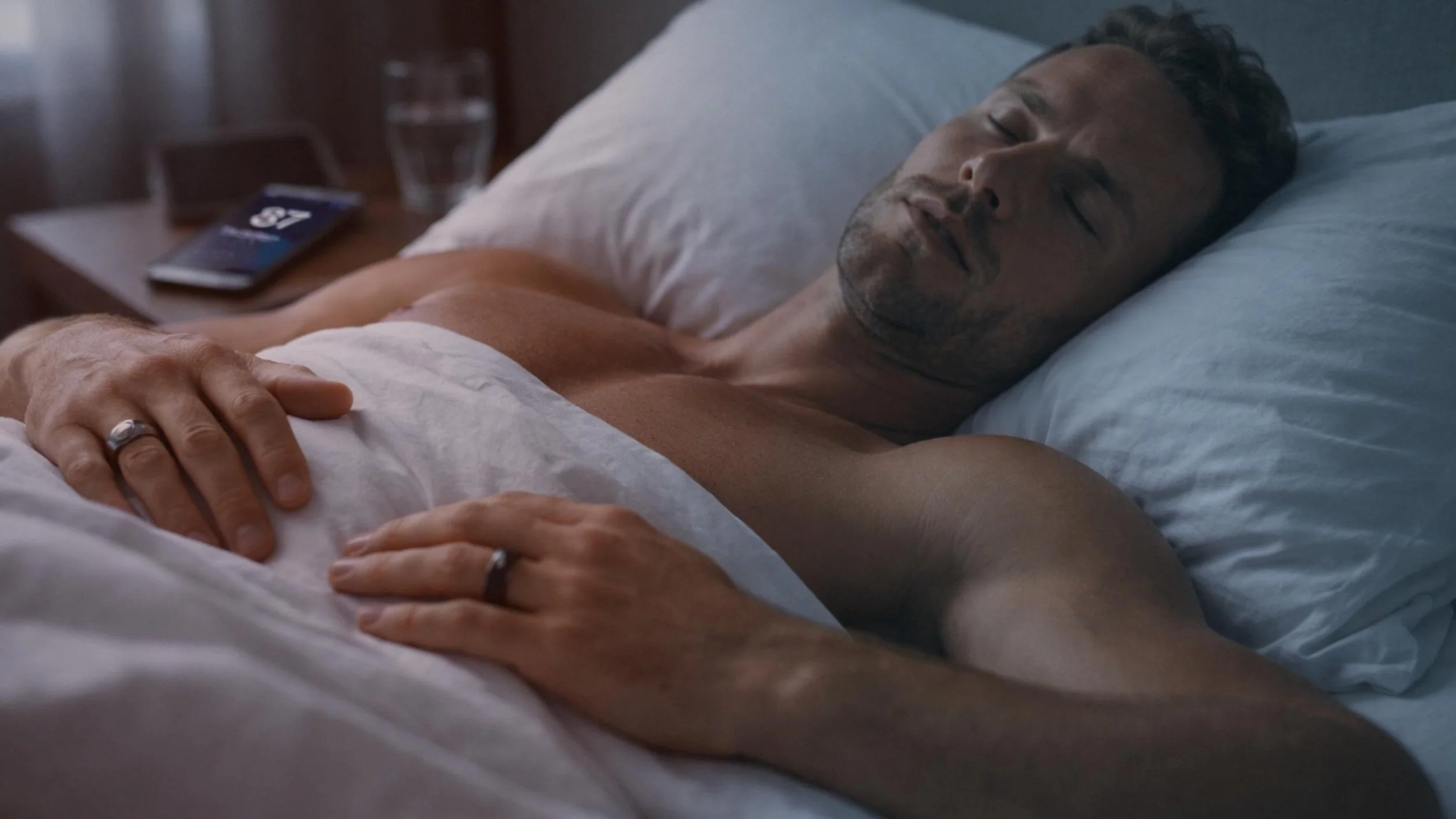
Most sleep tracker roundups miss the point for recovery-focused athletes. They compare step counting, SpO2 readings, and whether the device looks good with a business shirt. That is not what you need.
If you are using cold water immersion and sauna as primary recovery tools, what matters is a different set of questions: how accurately does the device track HRV during the hours after an ice bath? Does it detect the deep sleep increase that follows a correctly timed sauna session? Can it tell you whether your cold and heat protocol is actually accelerating recovery, or just exhausting your nervous system?
This guide answers those questions using peer-reviewed accuracy data and the specific sleep science of cold and heat exposure. Five devices. Real data. No filler.
Why Sleep Tracking Matters More When You Use Cold and Heat Therapy
Cold water immersion and sauna exposure both work primarily through overnight recovery. The physiological gains from each modality, brown fat activation, HRV upregulation, growth hormone release, anti-inflammatory signalling, are consolidated during sleep. If you are not sleeping well, you are leaving most of the adaptation on the table.
This creates a specific monitoring need. You do not just want to know how long you slept. You want to know whether your cold and heat protocol is improving your sleep architecture over time, and whether you are recovering adequately between sessions. That requires accurate HRV and sleep stage data, not just total sleep time.
What sauna does to sleep
Research by Putkonen and Elomaa found that a Finnish sauna session increased deep sleep (slow-wave sleep) by over 70% during the first two hours of post-sauna sleep, and by 45% over the first six hours. Participants also spent significantly less time awake after the session. A global sauna survey referenced in the 2024 MONICA study found 83.5% of respondents reported improved sleep following regular sauna use. Separate research found that sauna use triggers the same core-temperature drop that the body uses to initiate sleep, effectively accelerating the transition to deep sleep stages.
The mechanism: sauna raises core temperature, then the rapid cool-down on exit mimics the circadian temperature signal for sleep onset, triggering melatonin production and parasympathetic shift.
What cold exposure does to sleep
The relationship between cold water immersion and sleep is more nuanced. Timed correctly, cold exposure in the morning or early afternoon can improve HRV scores overnight by reducing sympathetic nervous system activation before bed. The norepinephrine spike from a morning cold plunge dissipates over six to eight hours, leaving a calmer nervous system for sleep.
Timed incorrectly, specifically within two to three hours of sleep, cold exposure can be stimulating enough to delay sleep onset. The Haghayegh et al. 2019 meta-analysis found that passive body heating of 40-42.5 degrees, including sauna, improves sleep onset latency when scheduled one to two hours before bed. Cold exposure does not carry the same pre-bed benefit.
The monitoring implication: if you are using both modalities, you need a sleep tracker that is sensitive enough to detect shifts in HRV, deep sleep duration, and sleep onset latency across sessions. That is a meaningful hardware and algorithmic requirement.
Sleep Tracker Comparison: Cold Plunge and Sauna Recovery
The table below covers the five most relevant sleep trackers for this use case, compared on the metrics that matter specifically for cold and heat recovery athletes.
HRV accuracy data from Dial et al. 2025 (Physiological Reports, 536 nights, ECG reference). Sleep staging from Brigham and Women's Hospital PSG study and Manners et al. 2025 (Flinders University, 400+ nights). Prices approximate as at 2026. Affiliate links used.
Device Reviews
1. Oura Ring 4 — Best overall for cold plunge and sauna tracking
The Oura Ring 4 is the most accurate consumer wearable for overnight HRV and resting heart rate measurement, based on the largest independent validation study available. Dial et al. 2025 tested five devices against ECG reference across 536 nights and found Oura Ring 4 and Gen 3 produced the strongest accuracy, outperforming Whoop, Garmin, and Polar.
For cold and sauna users specifically, the ring's finger-worn PPG sensor has a meaningful advantage. The finger has higher arterial blood flow than the wrist, producing a cleaner photoplethysmography signal and more reliable HRV calculations. This matters because HRV is the primary metric for tracking adaptation to cold and heat protocols over time.
Sleep staging accuracy is equally strong. A Brigham and Women's Hospital study compared Oura Ring against gold-standard polysomnography and found 79% agreement in four-stage sleep classification, five percentage points ahead of Apple Watch and ten ahead of Fitbit. Deep sleep sensitivity was notably superior: 79.5% vs 61.7% for Fitbit and 50.5% for Apple Watch.
Key specs: titanium build, 8-day battery, 100m waterproof, $8/month subscription, available on Amazon AU.
Recovery use case: Morning readiness score reflects previous night's HRV, temperature, and sleep quality. Tag sauna and cold plunge sessions in the app to see recovery correlation over time. Oura's own data from 75,000+ users showed improved sleep scores the night after a sauna session.
Limitation: Requires a subscription to unlock full data. Some users with very high baseline HRV may see reduced accuracy in the upper range.
2. Samsung Galaxy Ring — Best for Android users who refuse a subscription
The Samsung Galaxy Ring launched in Australia at around $699 and delivers excellent sleep tracking without a subscription fee. Where Oura charges $8 per month to unlock meaningful data, Samsung provides all core metrics from the one-time purchase.
Sleep tracking is the Galaxy Ring's strongest feature. It tracks sleep stages, HRV, skin temperature, SpO2, and calculates an Energy Score each morning based on sleep and activity. TechRadar named it the top sleep tracker in 2025 above all wrist-based competitors, specifically for its comfort and sleep accuracy.
The limitation for serious cold and heat recovery users is that the Galaxy Ring is Android-only and integrates solely with Samsung Health. If you use an iPhone or non-Samsung Android device, it will not work. Battery life is approximately seven days. There have been reported battery swelling issues in some units from late 2025, which Samsung is investigating.
Key specs: titanium build, 7-day battery, 100m waterproof, no subscription, Android only.
Recovery use case: Energy Score gives a straightforward morning recovery signal. Sleep animal chronotype profiling after seven days provides personalised guidance on session timing.
Limitation: Android-Samsung ecosystem only. Battery swelling reports in some units.
3. Whoop MG — Best for athletes who want strain-based training loads
Whoop takes a different approach to sleep tracking. Rather than leading with sleep stage detail, it focuses on recovery percentage and training strain. You wear a band, it charges the device while you wear it, and you pay a monthly subscription that covers the hardware.
HRV accuracy from the Dial et al. 2025 study placed Whoop 4.0 behind both Oura generations but ahead of Garmin and Polar. The Whoop MG (the current generation as of 2026) features updated sensors with improved HRV algorithm accuracy versus the 4.0.
For cold plunge and sauna users, Whoop is well-suited to people who structure their protocols around training blocks. It calculates whether your previous day's strain plus your sleep quality means you are ready to train hard or should prioritise recovery. It does not produce the same depth of sleep stage granularity as Oura.
Key specs: wrist band, 4-5 day battery (charges while worn), $40/month subscription, waterproof.
Recovery use case: Daily recovery percentage. HRV trend tracking. Strain score helps you decide when to push cold protocol intensity vs back off.
Limitation: Ongoing subscription cost adds up. Sleep stage detail less granular than Oura. Requires subscription from day one.
4. Garmin Fenix 8 — Best for endurance athletes who want GPS and health tracking in one
The Garmin Fenix 8 is a full smartwatch with multi-sport GPS tracking, topographic maps, and 16-day battery life. Sleep and HRV tracking are meaningful but secondary to the device's athletic performance focus.
From the Dial et al. 2025 accuracy study, Garmin Fenix 6 (one generation older) showed moderate HRV accuracy, below Oura and Whoop, though above Polar. The Fenix 8 uses the Elevate V5 sensor, an upgrade on the V3 used in the Fenix 6, so accuracy in the current generation should be improved. Garmin calculates body battery from HRV, sleep, stress, and activity data, which provides a useful daily readiness signal.
Key specs: titanium or carbon bezel options, 16-day battery (smartwatch mode), GPS, $40/mo subscription not required (core features free).
Recovery use case: Body Battery integrates well into structured training plans. Sleep tracking is useful for trend analysis even if HRV precision is slightly lower than ring-based options.
Limitation: Expensive entry point (~$1,200+ AUD). HRV accuracy behind Oura and Whoop in independent testing. Watch form factor less comfortable for sleep than a ring.
5. Withings Sleep Analyzer — Best for anyone who hates wearing a device to bed
The Withings Sleep Analyzer sits under your mattress and requires no charging, no wearing, and no forgetting to put it on. You slip it under your mattress at chest height, plug it into a power outlet, and it tracks your sleep every night automatically.
Accuracy is genuinely impressive for a non-contact device. A 2025 study by Manners et al. at Flinders University tested the device against polysomnography over more than 400 nights and found 83-89% accuracy in sleep-wake classification for healthy sleepers, comparable to consumer wearables. The standout feature is clinically validated sleep apnea detection, which no ring or watch currently offers at this price point.
For cold plunge and sauna users, the Withings is ideal if you find wearables interfere with sleep quality. The $200 AUD price point is lower than any ring or watch on this list, and there is no subscription required for core features.
Key specs: under-mattress mat, plug-in power, ~$200 AUD, no subscription for core features, sleep apnea detection, compatible with Apple Health and Google Fit.
Recovery use case: Set and forget sleep monitoring. Useful for users who want trend data without any friction. Cannot track HRV with the same precision as a finger-worn sensor.
Limitation: No daytime activity tracking. Less portable than wearables. Accuracy reduces slightly in people with sleep disorders. Slatted bed frames require a board for proper support.
How to Choose the Right Sleep Tracker for Your Recovery Protocol
The right device depends on what you are trying to measure and how much friction you are willing to accept.
If HRV accuracy for cold and sauna adaptation is your priority: Oura Ring 4. It is the most validated consumer device for overnight HRV and the one most likely to detect meaningful changes from your protocol.
If you are Android-based and do not want a subscription: Samsung Galaxy Ring. No ongoing fees, excellent sleep tracking, strong energy score, and a comfortable form factor.
If your protocol is structured around training blocks: Whoop MG. Strain-based load management is its core value proposition and pairs well with periodised cold exposure.
If you want everything in one device and are already a Garmin user: Fenix 8. Body Battery is a useful daily signal and the device doubles as a full endurance sports tracker.
If you hate wearing anything to bed: Withings Sleep Analyzer. Lowest friction, lowest price, sleep apnea detection included.
Timing Your Cold and Heat Sessions for Better Sleep Data
Regardless of which device you choose, how you schedule your sessions will affect the data your tracker returns and, more importantly, your actual sleep quality.
Optimal session timing for sleep quality
Based on Haghayegh et al. 2019 and Mantysaari et al. 2021
Sauna timing for optimal sleep
Schedule sauna sessions one to two hours before bed. The post-sauna core temperature drop triggers melatonin production and accelerates sleep onset. A Haghayegh et al. 2019 meta-analysis found that passive body heating of 40-42.5 degrees scheduled in this window significantly shortened sleep onset latency. Your sleep tracker should show improved deep sleep duration and higher sleep efficiency scores within two to four weeks of consistent evening sauna use.
Cold plunge timing for optimal sleep
Morning or early afternoon is optimal for cold exposure. The norepinephrine surge from a cold plunge elevates alertness and sympathetic tone for several hours. Morning sessions use this to your advantage for focus and performance during the day, then allow the nervous system to return to baseline before sleep. Cold plunges taken within two to three hours of bedtime may delay sleep onset and reduce sleep efficiency, which you will see clearly in your tracker data.
Contrast therapy and sleep
Contrast sessions (alternating sauna and cold immersion) timed in the afternoon or early evening produce a combined HRV benefit: the sauna drives deep sleep, the cold moderates the stimulatory norepinephrine response. Research by Mantysaari et al. 2021 found contrast therapy increased HRV compared to sauna-only sessions. If you practise contrast therapy, evening sessions ending with sauna (not cold) are recommended for sleep quality.
Frequently Asked Questions
Does cold plunging improve sleep quality?
It depends on timing. Morning cold plunges have a positive downstream effect on sleep quality through norepinephrine regulation and HRV improvement over time. Cold plunges taken within two to three hours of sleep can be stimulating enough to delay onset. Most sleep tracker data from consistent cold plunge practitioners shows improved overnight HRV and readiness scores within two to four weeks of a regular morning protocol.
Which sleep tracker is most accurate for HRV?
Based on the largest independent study available (Dial et al. 2025, 536 nights, ECG reference), Oura Ring 4 and Oura Gen 3 show the strongest accuracy for overnight HRV and resting heart rate among consumer wearables tested, ahead of Whoop 4.0, Garmin Fenix 6, and Polar Grit X Pro.
Does sauna use show up in sleep tracker data?
Yes, and the effect is measurable. Oura's own aggregate data from 75,000 members who tagged sauna sessions showed consistently improved sleep scores the following night. Research by Putkonen and Elomaa found deep sleep increased by over 70% in the first two hours following a sauna session. If you are using a sleep tracker, tag your sauna sessions and review your deep sleep and sleep onset latency trends over four to six weeks.
Is the Samsung Galaxy Ring available in Australia?
Yes. The Samsung Galaxy Ring launched in Australia in October 2024 and retails at approximately $699 AUD. It is available directly from Samsung and through select retail partners. A sizing kit can be ordered before purchase to ensure the correct fit.
Do I need a subscription for sleep tracking?
It depends on the device. Oura Ring requires an $8/month subscription to unlock full data. Whoop costs $40/month and the device itself is included. Samsung Galaxy Ring, Garmin Fenix 8, and Withings Sleep Analyzer all provide core sleep tracking features without a mandatory subscription, though optional premium tiers exist.
Final Thoughts
The right sleep tracker for a cold plunge and sauna practitioner is not the one with the most features. It is the one that accurately tracks HRV and sleep stages overnight and gives you actionable data on whether your protocol is working. Oura Ring 4 is the most validated tool for that specific job. Samsung Galaxy Ring is the strongest subscription-free alternative for Android users. And the Withings Sleep Analyzer is the best option for anyone who wants accurate sleep data without wearing anything to bed.
Sleep is where your cold and heat adaptations consolidate. Tracking it well is not a nice-to-have. It is how you know whether the practice is actually producing results.