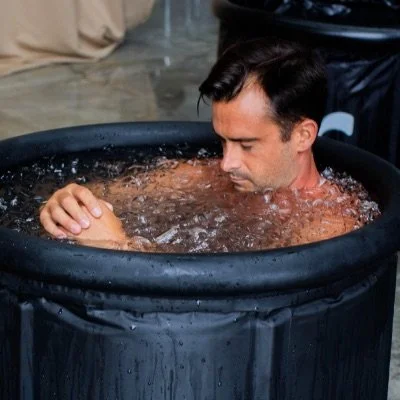
Ice Bath vs Sauna for Weight Loss: Research & Results

The debate exploded in the last few years. Cold plunge influencers swear by daily submersions for torching body fat. Sauna devotees cite elevated heart rates and cardiovascular demand. Everyone has an opinion. Very few have read the studies.
Here is what the peer-reviewed evidence actually shows about cold water immersion, heat therapy, and body composition. Both modalities trigger measurable metabolic responses. Both earn a place in a serious recovery protocol. But they work through completely different mechanisms, and the magnitude of their effects may not match the hype on either side.
How Cold Exposure and Heat Therapy Affect Metabolism
Before comparing ice bath calories burned to sauna session expenditure, you need to understand that these two modalities do not compete on the same playing field. They use entirely different physiological pathways.
The Cold Pathway: Thermogenesis and Brown Fat
Cold water immersion triggers an immediate thermoregulatory emergency. Core temperature begins to drop and your nervous system responds with two distinct mechanisms.
The first is shivering thermogenesis: involuntary muscle contractions that produce heat at two to five times your resting metabolic rate. A classic study by Johnson et al. found that metabolic rate increased approximately threefold during 60-minute immersion in 10 degrees Celsius water, with norepinephrine rising from a baseline of 359 pg/ml to a peak of 1,171 pg/ml at 45 minutes.
The second mechanism is non-shivering thermogenesis, driven by brown adipose tissue (BAT). Brown fat is specialised metabolic tissue that burns glucose and fatty acids directly to generate heat. Unlike regular white fat, it contains dense mitochondria packed with uncoupling protein 1 (UCP1), which allows energy to be dissipated as heat rather than stored.
Research published in Metabolism (Romu et al. 2016) found that six weeks of daily cold exposure increased supraclavicular BAT volume in the cold-exposure group (from 0.0175 to 0.0216 litres, p=0.049) while the control group that avoided cold actually saw their metabolic rate drop. A separate 4-week cold acclimation study in the Journal of Clinical Investigation found that daily 2-hour exposures at 10 degrees increased BAT oxidative capacity, with the tissue shifting toward stored fat (triglycerides) as its primary fuel.
This BAT adaptation is the real long game of cold exposure. You are not just burning calories during the session. You are remodelling your metabolic tissue.
The Heat Pathway: Cardiovascular Demand and Hormonal Activation
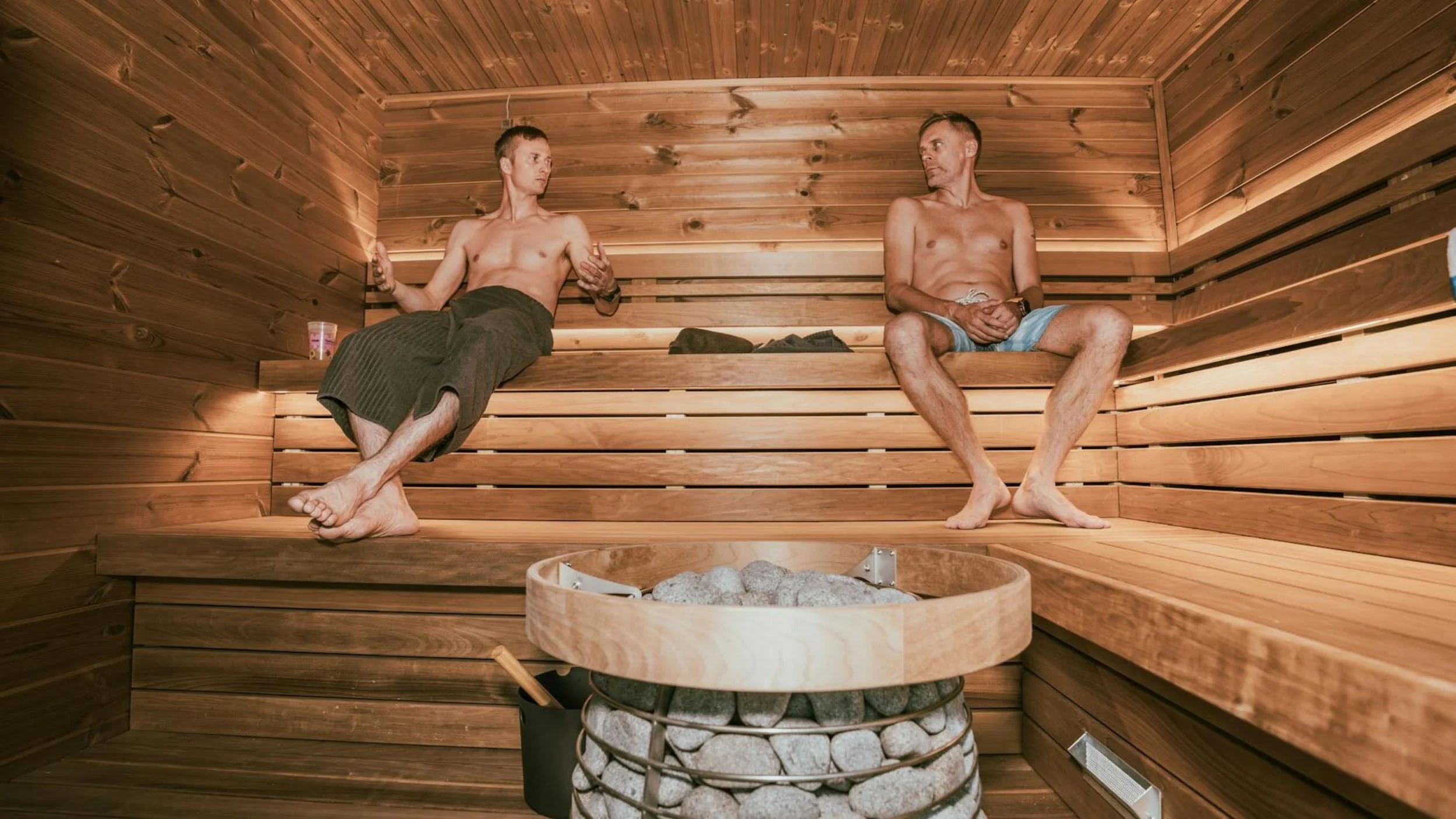
Sauna works through an entirely different mechanism. When core temperature rises, your cardiovascular system compensates aggressively. Heart rate can climb to 100-150 bpm during a traditional Finnish sauna session, comparable to moderate-intensity aerobic exercise.
This cardiovascular demand burns calories, and the calorie expenditure is more substantial than most people realise. Research by Podstawski et al. (2019) monitored 45 sedentary overweight men through four repeated 10-minute sauna sessions at 90-91 degrees Celsius.
In the first 10-minute bout, participants burned an average of 73 calories. By the fourth session, energy expenditure had risen to 134 calories per 10-minute block as heart rate climbed from 98 bpm to over 133 bpm. A full 40-minute structured session averaged approximately 333 calories total.
Heat exposure also triggers significant hormonal responses. Sauna raises plasma noradrenaline by 100-310%, and extended sessions produce growth hormone increases of 200-300% above baseline.
These acute hormonal responses do not directly translate to meaningful fat loss on their own, but they create a favourable metabolic environment when combined with proper training and nutrition.
What the Research Actually Shows
Most content on this topic picks one study and extrapolates wildly. The reality is more useful, and more honest, than any single headline.
Cold Water Immersion and Energy Expenditure
The research on cold water immersion and calorie burn is complicated by enormous variation in protocols. Water temperature, immersion depth, session duration, and existing brown fat levels all influence outcomes significantly.
A 2024 systematic review and meta-analysis in Biomedicines (Drouet et al.) found that cold exposure consistently elevated free fatty acid levels, indicating that brown adipocytes are actively drawing on white fat stores for thermogenesis. In BAT-positive individuals, cold exposure also reduced insulin levels, pointing to improved metabolic signalling beyond simple calorie burn.
The honest picture on acute calorie burn: a 5-10 minute immersion at 3-8 degrees likely burns 50-150 calories above resting baseline. That is modest. The more compelling case for cold exposure weight loss is the chronic adaptation. A 2024 narrative review in
The honest picture on acute calorie burn is that a 5-10 minute immersion at 3-8 degrees likely burns 50-150 calories above resting baseline. That is modest on its own. The more compelling argument is the chronic adaptation: a 2024 narrative review in Nutrients (Huo et al.) confirmed that intermittent cold exposure consistently increases BAT activity and promotes beiging of white adipose tissue, shifting fat depots toward energy-dissipating rather than energy-storing phenotypes. This metabolic remodelling compounds over weeks and months.
Sauna and Body Composition
The sauna literature on fat loss is similarly nuanced. The Podstawski 2019 data above gives the most reliable per-session calorie estimates from a controlled setting. Longer-term studies on regular sauna use have shown improvements in cardiovascular health markers, insulin sensitivity, and inflammatory status, all of which indirectly support healthier body composition.
The important caveat: no well-controlled study has demonstrated meaningful fat loss from sauna use alone in the absence of dietary change or exercise. Sauna is a force multiplier, not a standalone fat-loss intervention.
"Both cold and heat exposure can modestly increase energy expenditure and support metabolic health. But neither should be the centrepiece of a fat loss strategy. They are tools that amplify the results of an already solid foundation of nutrition and training." Susanna Soberg, PhD, cold exposure researcher and author of Winter Swimming
The bottom line: neither modality will produce dramatic fat loss in isolation. Both earn their place in a comprehensive protocol. The question is which benefits align with your goals and how to sequence them intelligently.
Calorie Burn and Metabolic Comparison: Cold Plunge vs Sauna
The table below synthesises data from peer-reviewed studies to give you a practical comparison. Calorie estimates are based on an 80 kg adult and will vary based on individual physiology, session parameters, and adaptation level.
Calorie estimates are indicative for an 80 kg adult and will vary with water temperature, session structure, individual physiology, and adaptation level. Sources: Johnson et al. 1977 (J Appl Physiol); Podstawski et al. 2019 (BioMed Res Int); Romu et al. 2016 (Metabolism); Sramek et al. 2000 (Eur J Appl Physiol); Laukkanen et al. 2018 (Mayo Clin Proc); Fyfe et al. 2015 (J Physiol).
A few things stand out. The acute metabolic rate increase during cold immersion is dramatically higher, but sessions are short. This roughly equalises per-session calorie burn between the modalities. Where cold exposure takes a clear lead is in chronic adaptation, specifically BAT recruitment and the sustained norepinephrine elevation that supports both metabolism and cognitive performance long after the session ends.
Brown Fat, Hormones, and the Longer Game
If calories burned per session is your only metric, you are measuring the wrong thing. The deeper value of both modalities lies in downstream hormonal and metabolic effects that persist for hours and, with consistent practice, compound over months.
Brown Fat Activation: The Cold Exposure Advantage
Brown adipose tissue is found in adults primarily around the neck, clavicles, and spine. Unlike white fat, which stores energy, brown fat burns fuel to generate heat. BAT activity is inversely correlated with BMI: leaner, metabolically healthier individuals tend to have more active BAT.
Repeated cold exposure is the most well-studied method for increasing BAT volume and activity in humans. The Romu et al. 2016 RCT showed supraclavicular BAT volume increased measurably after six weeks of daily cold exposure. A 2021 study in Cell Reports Medicine by Soberg et al. found that experienced winter swimmers (who typically alternate cold dips with sauna) demonstrated enhanced cold-induced thermogenesis and altered BAT regulation compared to controls, suggesting long-term cold adaptation reshapes how this tissue responds to temperature challenges.
This is why researchers increasingly view cold exposure as the more promising modality for long-term metabolic enhancement. The session burns modest calories. The adaptation changes your metabolic baseline.
Norepinephrine: The Hormone Driving Lipolysis
Cold water immersion triggers one of the most dramatic norepinephrine responses of any non-pharmacological intervention. Research by Sramek et al. (2000) found that immersion in 14 degree water increased plasma noradrenaline and dopamine by 530% and 250% respectively. Even brief 10-minute sessions at 14 degrees produced significant and sustained elevations in norepinephrine, epinephrine, and cortisol that remained elevated for hours post-immersion (Eimonte et al. 2021).
Norepinephrine activates lipolysis, the release of fatty acids from stored body fat. It also elevates alertness, focus, and mood. This is why consistent cold exposure practitioners report improved energy and mental clarity as among the first and most reliable benefits.
Sauna also raises noradrenaline, by 100-310% depending on temperature and duration. This is meaningful but lower than cold immersion. Sauna's comparative hormonal advantage is growth hormone, with extended sessions producing spikes of 200-300% above baseline. These GH elevations support tissue repair and may contribute to maintaining lean mass, though they have not been conclusively linked to direct fat loss.
Inflammation, Insulin Sensitivity, and the Metabolic Environment
Both modalities reduce systemic inflammation, which matters more for body composition than most people appreciate. Chronic low-grade inflammation impairs insulin signalling, promotes fat storage, and interferes with recovery from training.
The Drouet et al. 2024 meta-analysis found that BAT-positive individuals showed significant reductions in insulin levels following cold exposure, with elevated free fatty acids confirming active fat mobilisation. Regular sauna use has been linked to improved cardiometabolic markers and reduced inflammatory load across multiple Finnish cohort studies. By improving the underlying metabolic environment, both tools make fat loss easier to achieve and sustain, even when the direct calorie burn is modest.
How to Use Both Modalities Strategically
The most evidence-informed approach is not choosing between cold and heat. It is using both intelligently within a well-designed protocol.
Cold Exposure Protocol for Metabolic Benefits
Temperature: 3-8 degrees Celsius for meaningful thermogenic and BAT stimulus
Duration: 3-10 minutes per session (longer does not linearly increase benefit for metabolic adaptation)
Frequency: 3-5 sessions per week for consistent BAT recruitment
Timing: Morning sessions may amplify the norepinephrine and alertness response throughout the day
Avoid post-strength training: Cold immersion within 4 hours of resistance training may blunt hypertrophy signalling by suppressing the inflammatory cascade needed for muscle adaptation (Fyfe et al. 2015)
Sauna Protocol for Metabolic and Cardiovascular Benefits
Temperature: 80-100 degrees Celsius for traditional sauna; 50-60 degrees for infrared
Duration: 15-30 minutes per session, or structured 4 x 10-minute bouts with cool-down intervals
Frequency: 3-7 sessions per week; Finnish research shows dose-dependent cardiovascular mortality reduction up to daily use (Laukkanen et al. 2018)
Timing: Evening sessions support parasympathetic recovery and sleep quality
Hydration: Replace fluids and electrolytes before and after. Dehydration undermines all downstream benefits
Contrast Therapy
Alternating cold and heat in the same session is widely practised by elite athletes and has physiological logic behind it. The vasodilation-vasoconstriction cycle drives circulatory adaptation, and the combined hormonal stimulus from both modalities may offer compounding metabolic benefits. A typical approach is 15-20 minutes of sauna followed immediately by 3-5 minutes of cold immersion, repeated for two to three rounds. The Soberg et al. 2021 research included winter swimmers who regularly practise exactly this combination, and this group showed enhanced cold-induced thermogenesis versus controls matched for age, BMI, and fitness.
Frequently Asked Questions
Do ice baths burn belly fat specifically?
No. Spot reduction is a myth regardless of the tool. Cold exposure increases overall metabolic rate and promotes systemic lipolysis through norepinephrine release and BAT activation. Over time this contributes to total body fat reduction, but the location where fat is mobilised is determined by genetics and hormonal factors, not by where you apply cold.
How many calories does a 10-minute ice bath burn?
Estimates vary widely based on water temperature, immersion depth, body size, and existing cold adaptation. A rough figure for a 10-minute immersion at 3-8 degrees is 50-150 calories above resting baseline. The more important metric is post-session metabolic elevation and the long-term BAT adaptation that compounds with consistent practice. Focusing on per-session calorie burn misses most of the value.
Is sauna or cold plunge better for fat loss after a workout?
For fat loss specifically, sauna is the safer post-workout choice. Cold immersion immediately after resistance training may blunt the inflammatory cascade required for muscle adaptation and hypertrophy. Since muscle mass is the primary driver of resting metabolic rate, protecting your training adaptations should take priority. Reserve cold plunges for rest days or at least four hours after strength sessions.
Can I use both sauna and ice bath on the same day?
Yes. Many athletes and recovery-focused individuals use contrast protocols in the same session. A common structure is 15-20 minutes of sauna followed by 3-5 minutes of cold immersion, repeated two to three times. This is safe for healthy individuals and the circulatory and hormonal benefits are likely additive. Begin with sauna to warm up, finish with cold to close pores and shift to parasympathetic tone.
How long before I see metabolic changes from cold exposure?
Research suggests measurable increases in BAT activity and volume can occur within two to six weeks of consistent cold exposure at three to five sessions per week (Romu et al. 2016). Subjective improvements in energy, focus, and cold tolerance typically appear within the first week. For visible body composition changes, expect to commit to a minimum of eight to twelve weeks alongside appropriate nutrition and training. Cold exposure accelerates the process; it does not replace it.
Final Thoughts
Ice bath vs sauna for weight loss does not have a single winner. Cold exposure offers a unique long-term metabolic advantage through BAT activation, sustained lipolysis, and norepinephrine-driven energy mobilisation. Sauna delivers meaningful cardiovascular stimulus, hormonal support for tissue repair, and dose-dependent reductions in inflammatory markers. Together, they create a recovery and metabolic protocol that exceeds what either modality achieves independently.
Neither replaces a caloric deficit. Neither replaces progressive resistance training. But for people who already train and eat well, both are legitimate force multipliers with genuine, peer-reviewed mechanisms of action.
The protocols that produce results are the ones you actually follow, week after week. That is where your equipment matters. A reliable cold plunge that holds temperature without daily intervention, a setup that fits your space and your schedule: these are the details that convert intention into a consistent ritual.
At Ritual Recovery, every ice bath and chiller we build is designed for exactly that: removing friction so the practice becomes effortless. Because the research is clear. The benefits are real. But only if you show up.