Home Sauna Australia: What Serious Buyers Need to Know
A home sauna is one of those investments that sounds like a luxury until you own one. After three months of daily use, the conversation changes. Users consistently describe it less as a wellness amenity and more as an essential daily recovery and mental reset tool.
The research supports this transition. The cardiovascular mortality reduction data from regular sauna use, published in JAMA Internal Medicine by Laukkanen et al., shows dose-dependent benefits across two to seven sessions per week over a twenty-year longitudinal follow-up in Finnish populations. This is not spa marketing. It is one of the most robust data sets on voluntary health behaviour in the medical literature.
For buyers considering a home sauna in Australia, the decision involves more than selecting a model. It involves specification choices — timber, heater capacity, indoor versus outdoor, climate compatibility — that determine whether your investment performs for five years or becomes a maintenance problem.
This guide covers those decisions honestly.
Why the Home Sauna Market Has Grown in Australia
Sauna culture in Australia has traditionally been limited to gym change rooms and spa facilities. The shift toward home installation has been driven by three intersecting factors.
Performance and recovery culture: Athletes, coaches, and performance-focused individuals have moved recovery infrastructure from the commercial gym to the home. The same cohort buying cold plunges and red light therapy panels is specifying home saunas as part of a serious recovery setup.
Longevity research mainstreaming: Rhonda Patrick, Peter Attia, and similar voices in the longevity and performance research space have brought the Finnish sauna cardiovascular data to a mainstream audience. The research is credible, accessible, and compelling enough to motivate purchase behaviour.
Post-pandemic infrastructure investment: The shift toward spending on home environment quality, which accelerated from 2020, has persisted. A home sauna competes in the same capital conversation as a home gym, a quality kitchen, or an outdoor entertaining area.

The Physiology Case for Regular Sauna Use
Before specifying equipment, understanding what you are trying to achieve clarifies the product decisions.
Heat Shock Proteins
Exposure to sauna-level heat (75 to 100°C) activates heat shock protein production. Heat shock proteins are molecular chaperones that assist with protein folding, cellular repair, and protection against stress-induced protein damage. Research suggests regular heat shock protein induction improves cellular resilience over time.
Cardiovascular Adaptation
The JAMA Internal Medicine study (Laukkanen, 2018) found that men who used a sauna four to seven times per week had a 50% lower risk of fatal cardiovascular events compared to those who used a sauna once per week, over a twenty-year follow-up period.
The proposed mechanism involves repeated cardiovascular adaptation to the acute stress of high heat: improved endothelial function, reduced arterial stiffness, and enhanced parasympathetic recovery post-sauna.
Growth Hormone Response
Research published in Acta Physiologica Scandinavica documented significant growth hormone elevation following sauna sessions at temperatures above 80°C. Growth hormone plays a role in tissue repair, fat metabolism, and lean mass preservation.
This effect is heat intensity-dependent. A sauna that reaches 80°C or above is required for this response. A sauna that plateaus at 65 to 70°C due to an undersized heater will not produce the same hormonal stimulus.
Mental Performance and Recovery
The parasympathetic nervous system activation that follows a sauna session — the profound relaxation state that sets in as core body temperature begins to normalise — is one of the most frequently cited benefits among regular users. Sleep quality improvements are consistently reported and mechanistically coherent with the post-sauna cortisol reduction and body temperature drop that facilitates sleep onset.
Traditional Sauna vs Infrared: What Serious Users Choose
This is the most common specification question for first-time home sauna buyers and the one where the most misinformation exists.
Traditional (Finnish) Sauna
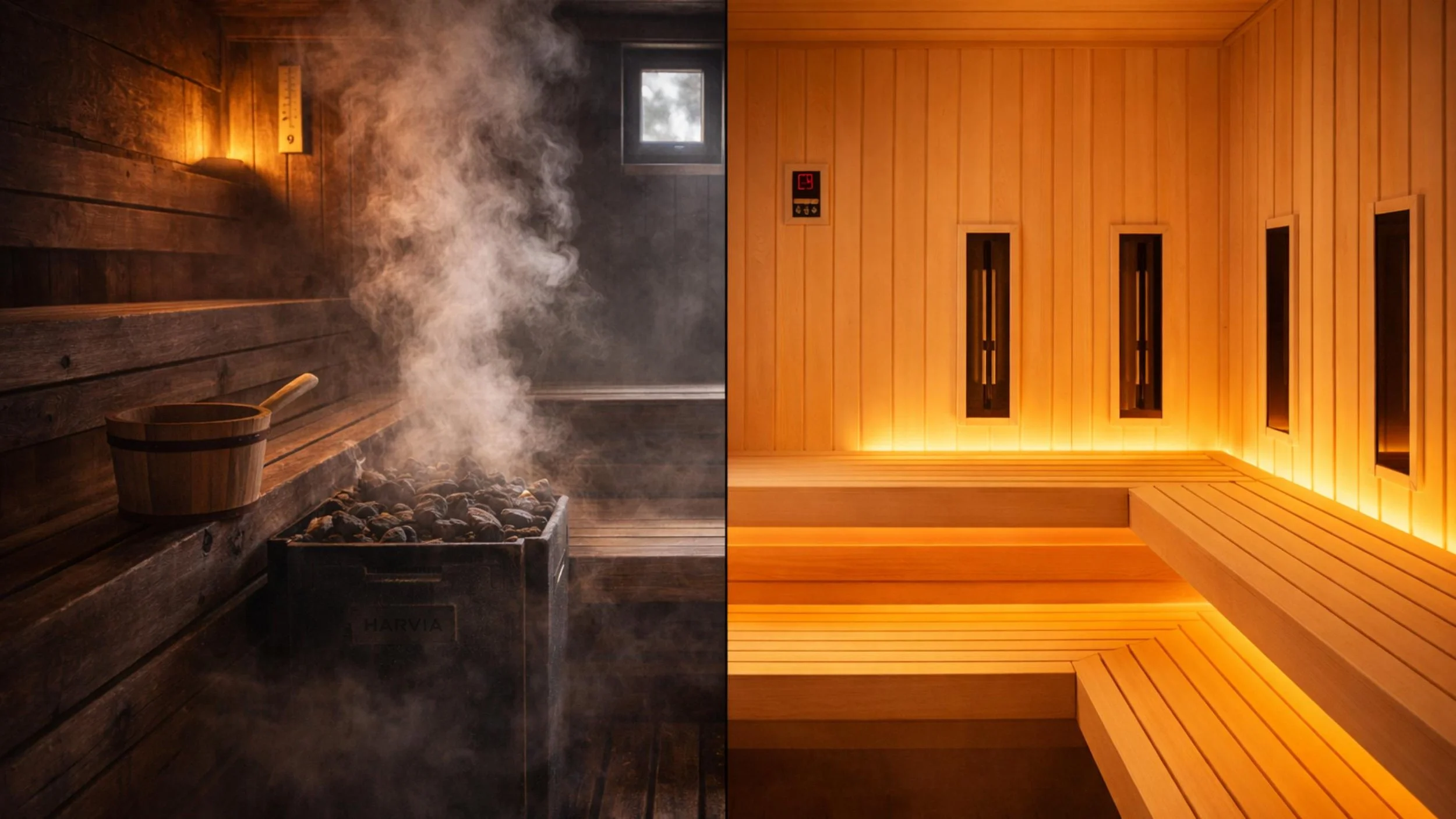
Operates at 70 to 100°C with low humidity. Water poured on heated stones (löyly) creates a steam burst that elevates perceived heat intensity dramatically. This is the thermal environment documented in the Laukkanen cardiovascular research and the Rhonda Patrick heat shock protein work.
The thermal stimulus of a traditional sauna, the combination of convective heat from the air and radiant heat from the heater stones, is significantly more intense than infrared at the same air temperature.
Infrared Sauna
Operates at 45 to 60°C. Infrared emitters heat the body directly through radiant heat rather than heating the air to high temperatures. The experience is described as more tolerable for users who find traditional sauna heat intensity difficult.
The research on infrared sauna is thinner and less consistent than traditional sauna research. Most of the high-quality longevity and cardiovascular data was conducted in traditional Finnish sauna environments.
For buyers motivated by the published research outcomes, traditional sauna is the correct specification. For buyers who are primarily seeking the experience and find traditional temperatures difficult to tolerate, infrared is a legitimate alternative — with the understanding that the evidence base is different.
The Legion Sauna is a traditional Finnish configuration, reaching 80°C and above in approximately 30 to 45 minutes.
Timber Specification: Why It Matters in Australia
Timber choice affects the sauna's durability, heat quality, maintenance requirements, and sensory experience. In Australian conditions specifically, it also affects dimensional stability and resistance to humidity cycling.
Japanese Cedar (Hinoki / Thuja)
The premium specification for home saunas. Characteristics relevant to Australian installation:
High natural oil content makes it moisture-resistant without treatment
Dimensional stability under repeated heat cycling (expands and contracts minimally compared to other softwoods)
Natural antimicrobial properties
Distinctive aromatic quality — the cedar scent released during heating is part of the authentic sauna experience
Resistance to warping in high-humidity coastal climates
Nordic Spruce or Pine
Common in lower-cost sauna products. Performs acceptably in controlled indoor environments. In Australian coastal or tropical climates with high humidity variation, shows more dimensional movement over time. Requires more frequent maintenance to prevent resin seepage and surface deterioration.
Western Red Cedar
Similar properties to Japanese Cedar but sourced from North American forests. Legitimate premium specification, slightly less aromatic than Japanese Cedar. Excellent moisture resistance and dimensional stability.
The Legion Sauna uses 30mm Japanese cedar timber throughout. The 30mm wall thickness is meaningfully more substantial than many products using 15 to 20mm timber, providing better insulation, faster heat-up, and longer heat retention between sessions.
Heater Specification: The Most Underspecified Element
The heater is the heart of the sauna. An undersized heater is the most common cause of a disappointing sauna experience.
Heater Capacity Calculation
A general guideline: 1kW of heating capacity per cubic metre of sauna volume, with a meaningful buffer for faster heat-up and higher temperatures.
For a standard two to three person residential sauna with internal volume of approximately 3 to 4 cubic metres:
Minimum adequate: 3 to 4kW
Recommended for strong performance: 4.5 to 6kW
Premium: 6kW and above
Many imported saunas in the $2,000 to $4,000 price range are shipped with 3kW heaters in cabins designed for 4 to 5kW. The consequence is a sauna that technically reaches operating temperature but takes significantly longer and cannot achieve the 80°C+ temperatures required for the documented heat shock protein and growth hormone responses.
The Legion Sauna uses a Harvia The Wall 4.5kW heater. Harvia is a Finnish manufacturer, the reference brand in professional sauna specification worldwide. The 4.5kW rating in a 2-3 person cabin provides the thermal headroom to reach 80°C and above within 30 to 45 minutes, which is the requirement for the documented physiological responses.
Stone Quality
Heater stones are not interchangeable. High-density volcanic rocks absorb and radiate heat more consistently and withstand repeated thermal cycling without fracturing.
The Legion Sauna includes 20kg of genuine Harvia Olivine Diabase stones — the same stone specification used in Finnish professional saunas. These stones are selected for thermal mass, durability under water contact, and even heat distribution.
Indoor vs Outdoor Installation in Australian Conditions
Both configurations are viable. The decision depends on available space, climate zone, and lifestyle integration.
Outdoor Installation
Advantages:
Larger footprint possible
Natural ventilation during session
Integration with existing outdoor entertaining or pool/wellness space
Does not occupy valuable indoor floor area
Considerations:
Requires weather-resistant construction with appropriate roof and siding
Electrical connection from house is required (typically 20A dedicated circuit)
UV protection and moisture management are ongoing requirements in high-exposure locations
In tropical climate zones (Darwin, Cairns), extreme humidity requires careful drainage design
The Legion Sauna includes an outdoor roof kit as standard, allowing installation in covered or uncovered outdoor positions across all Australian climate zones.
Indoor Installation
Advantages:
No UV or weather exposure
Closer access to shower and change facilities
Less ambient temperature variation affecting heat-up time
Considerations:
Ventilation design is critical — moisture management in an enclosed indoor space requires adequate exhaust
Floor and wall waterproofing beneath and adjacent to the sauna
Footprint must be factored against available floor space
Space and Services Requirements
External dimensions (Legion Sauna): 131cm (W) × 146cm (D) × 212cm (H) including outdoor roof kit.
Minimum installation area: Allow 30 to 50cm clearance on non-door sides for maintenance access and thermal performance.
Total footprint including clearance: Approximately 2m × 2.2m = 4.4 square metres.
Electrical: Dedicated 20A circuit, hard-wired by a licensed electrician. This is a non-negotiable requirement for Australian electrical compliance. The Harvia heater cannot be run from a standard 10A power point.
Flooring: A flat, level surface rated to support 190kg (Legion Sauna weight) plus occupants. Timber decking, concrete, tiles, and pavers are all appropriate bases.
Home Sauna Installation: What Is and Is Not DIY
The Legion Sauna is designed for self-assembly by two people in two to three hours. Pre-assembled wall and floor panels reduce the technical complexity significantly compared to full from-scratch builds.
What you can do yourself:
All structural assembly (walls, floor, ceiling, roof)
Heater stone stacking
Bench installation
Door hanging and fitting
What requires a licensed tradesperson:
Electrical connection (20A circuit, hard-wiring the heater)
Any gas connection if applicable
Structural assessment if installing on a rooftop or elevated deck
| Option | Upfront Cost | Sessions per Week Accessible | 5-Year Cost | Notes |
|---|---|---|---|---|
| Commercial gym sauna | $0 | 3–5 (travel-dependent) | $2,600–$5,200 (gym membership) | Schedule-dependent, shared facility |
| Infrared sauna blanket | $200–$600 | Daily | $400–$800 total | Limited surface coverage, different mechanism |
| Entry-level cabin sauna | $2,000–$4,000 | Daily | $2,500–$5,000 | Heater capacity and timber quality concerns |
| Legion Traditional Sauna | $7,290 | Daily | $8,500–$9,500 (inc. electricity) | Full specification, daily practice ready |
| Custom built sauna | $15,000+ | Daily | $17,000+ | Bespoke, highest cost |
The Legion sits in the premium residential specification category at a price point that reflects its heater and timber specification without the cost escalation of a fully custom installation.
Building a Complete Contrast Therapy Setup
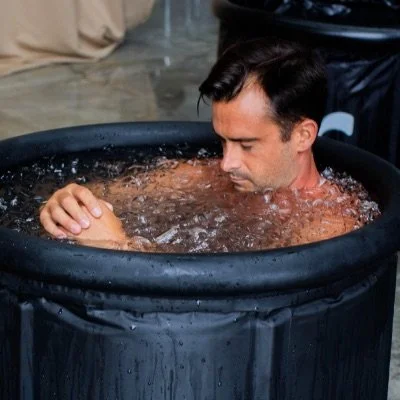
For buyers who are also considering cold immersion, a home sauna represents half of a complete contrast therapy capability.
A sauna and cold plunge in proximity, connected by a clear path and a consistent protocol, is the complete recovery infrastructure that most professional sports facilities offer as a standard amenity.
The combination of the Legion Sauna and either the Centurion or Roman Ice Bath, running a structured contrast protocol, creates measurably better recovery outcomes than either modality in isolation.
View the contrast therapy package options from Ritual Recovery here.
The Decision Framework
A home sauna in Australia is a legitimate long-term investment in performance, health, and property value. The buyers who get the most from it are those who use it consistently, understand the protocol requirements, and specify equipment that supports daily use without compromise.
The Legion Sauna was designed for that buyer. Japanese cedar construction, a properly sized Harvia heater, and Australian climate compatibility are not marketing claims — they are specification decisions that determine whether the sauna you install delivers the outcomes the research documents.
View the Legion Sauna full specifications, pricing, and installation documentation here. Our team is available for any specification question.