Ice Bath for Athletic Recovery: How Athletes Should Use Cold
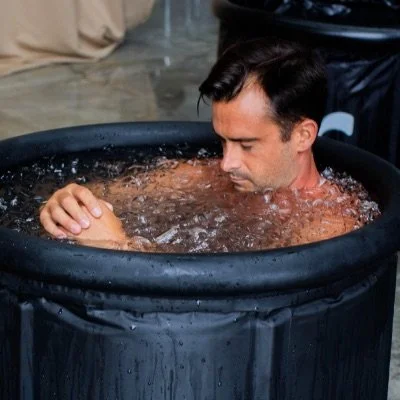
Cold water immersion has moved from a fringe recovery method to a mainstream performance tool used by professional sporting organisations, elite military units, and high-output athletes across every discipline.
The question for serious athletes is no longer whether cold exposure works. It is how to implement it correctly, and what equipment specification makes daily ice bath use practical and protocol-consistent.
What Cold Water Immersion Actually Does to a Trained Body
The mechanisms are documented. The debate among sports scientists is not whether cold immersion produces effects, but which effects matter most in which training contexts.
Inflammation and Tissue Repair
Post-exercise inflammation serves a necessary role in long-term adaptation. Cold water immersion reduces acute inflammatory markers, including creatine kinase and interleukin-6, which has implications for both short-term recovery and training periodisation.
Research published in the Journal of Physiology found that regular post-exercise cold water immersion, while effective for short-term recovery and reducing DOMS, may attenuate some aspects of long-term hypertrophic adaptation. This is the most important nuance athletes need to understand before building cold immersion into every session.
The practical implication: cold immersion is a tool for recovery and performance readiness, most valuable during competition blocks, heavy training periods, and multi-day event contexts where short-term recovery priority outweighs long-term structural adaptation.
Neuromuscular Recovery
Cold immersion reduces delayed onset muscle soreness more effectively than most passive recovery modalities. A 2012 Cochrane Review meta-analysis found cold water immersion significantly more effective than passive rest for reducing DOMS at 24, 48, and 96 hours post-exercise.
For team sport athletes, combat athletes, and anyone competing in multi-day events, this effect has direct performance implications.
Central Nervous System Response
The norepinephrine spike triggered by cold water immersion at 14 degrees Celsius has been documented at 200 to 300% above baseline in research cited by Andrew Huberman and Søberg et al. Norepinephrine plays a role in focus, alertness, and mood regulation.
Athletes who use cold immersion as part of their morning activation protocol report improved attentional focus and readiness to train. While subjective, the neuroendocrine mechanism supporting this effect is well-documented.
Practical Protocols for Different Athletic Goals
A note before these protocols: duration and temperature are inversely related. The colder the water, the shorter the session needs to be to achieve the target stimulus. Spending 10 to 15 minutes in water below 12 degrees Celsius is not a realistic or appropriate target for most athletes. The research-supported minimum effective dose is considerably more manageable than most people expect.
Recovery Between Training Sessions
Target temperature: 10 to 15 degrees Celsius Duration: 2 to 5 minutes Timing: Within 2 hours post-training
This is the standard protocol supported by applied sports science research. The goal is peripheral vasoconstriction, metabolite clearance acceleration, and reduction in acute inflammatory load. At 10 degrees Celsius, 2 to 3 minutes is sufficient to drive the physiological response. More time does not linearly improve outcomes and significantly increases perceived cost.
Competition Period Recovery
Target temperature: 10 to 12 degrees Celsius Duration: 2 to 4 minutes Timing: Within 90 minutes of competition
During competition blocks, short-term recovery priority is absolute. Cold immersion is an appropriate daily tool in this context. Keep sessions short and consistent. The goal is metabolite clearance and sympathetic nervous system downregulation between efforts, not prolonged exposure.
Mental Performance and Morning Activation
Target temperature: 4 to 10 degrees Celsius Duration: 1 to 3 minutes Timing: Morning, pre-training, or pre-competition
This protocol leverages the norepinephrine and dopamine response for cognitive readiness and mood uplift. Slightly warmer water is appropriate here — the goal is neurological activation, not deep tissue cooling. Getting in is the hard part. The physiological response begins within the first 30 seconds.
Contrast Protocol for Heavy Training Blocks
Alternating the cold plunge with heat exposure in the Legion Sauna creates a contrast therapy effect that amplifies recovery beyond what either modality delivers in isolation. A typical contrast session of 10 to 15 minutes in sauna followed by 2 to 3 minutes in the cold plunge, repeated across 2 to 3 cycles, combines the vasoconstriction-vasodilation benefit with the heat shock protein and norepinephrine effects described above.
The key is that the cold component stays short. Two to three minutes at 10 to 12 degrees Celsius is the target dose per cycle. The sauna phase provides the heat stimulus; the cold phase provides the contrast response. More cold time does not improve the outcome.
See the full contrast therapy guide for athletes here.
Ice Bath vs. Sauna: A Periodisation Decision Framework
This is the question most athletes get wrong. Both modalities improve recovery, but they work through different mechanisms and serve different purposes depending on where you are in your training cycle. Using both indiscriminately is better than using neither — but using them intelligently based on your training goal is where the real performance edge lives.
The table below maps each modality to specific training contexts, goals, and timing considerations.
| Training Context | Cold Plunge | Sauna | Rationale |
|---|---|---|---|
| Hypertrophy block (strength & muscle growth priority) |
✘ Avoid within 4–6 hrs post-training | ✔ Use 30–60 min post-training | Cold attenuates mTOR signalling and blunts hypertrophic adaptation. Sauna upregulates growth hormone and heat shock proteins without interfering with strength adaptation. |
| Competition week / multi-day events |
✔ Daily, 2–4 min at 10–12°C | ✔ Light use (10–15 min at 70–80°C) | Both support short-term recovery. Cold reduces DOMS and inflammatory load. Sauna assists parasympathetic activation and sleep quality. Avoid heavy contrast sessions that increase fatigue. |
| In-season maintenance (repeat performance) |
✔ 3–4x per week post-session | ✔ 2–3x per week, separate or as contrast | Both appropriate. Contrast therapy (sauna → cold) amplifies recovery effect. Prioritise cold after high-output training days. |
| Pre-season conditioning (structural adaptation priority) |
⚠ Selectively — non-training days or 4+ hrs post-session | ✔ Use freely to support tissue resilience | Pre-season is when structural adaptation matters most. Reserve cold for days when recovery speed outweighs adaptation concern. Sauna load is safe throughout. |
| Endurance / cardio training | ✔ Post-session, 2–4 min | ✔ Post-session, 15–20 min | Neither modality interferes with endurance adaptation. Sauna has independent cardiovascular benefits. Both can be used aggressively in endurance blocks. |
| Heavy volume week (overreaching phase) |
✔ Daily, prioritise consistency | ✔ 15–20 min most evenings | Recovery demand is highest. Both modalities are appropriate and complementary. Contrast therapy is particularly effective during overreaching phases. |
| Deload / off-season | ⚠ Use for mental health and baseline maintenance | ✔ Use freely — relaxation, sleep, metabolic health | Reduced training load means reduced recovery urgency. Both modalities still deliver systemic health benefits outside a performance context. |
| Post-competition (48 hrs after) |
✔ Immediately post and following 24 hrs | ⚠ Avoid intense sauna in first 12 hrs | Acute inflammatory load is highest immediately post-competition. Cold is the priority. Sauna can reintroduce once acute soreness has cleared. |
| Morning activation (pre-training) |
✔ 1–3 min at 14–20°C | ✔ 10–15 min low heat as warm-up | Cold elevates norepinephrine and dopamine for focus and drive. Sauna aids tissue pliability pre-session. Both viable depending on training type. |
| Long-term longevity (non-performance priority) |
✔ Use freely, lower frequency acceptable | ✔ High priority — 4–7x per week | Sauna evidence for cardiovascular mortality reduction is strongest in the longevity literature. Cold adds metabolic, immune, and mood benefits. Both should be consistent long-term practices. |
The simplest heuristic: if your goal for the next 4 to 6 weeks is getting stronger or adding muscle, treat cold immersion as an occasional tool rather than a daily one. If your goal is maintaining performance, competing, or recovering for the next session, cold is your primary recovery lever. Sauna sits alongside both phases without conflict.
Why Daily Protocol Compliance Requires Proper Equipment
This is where equipment selection directly affects training outcomes.
An athlete committed to a four-to-five day per week cold immersion protocol cannot rely on manual ice logistics. The preparation burden, inconsistent temperature, and accumulated cost over a training season makes manual ice setups fundamentally incompatible with serious athletic use.
The Australian Institute of Sport and professional sporting organisations use active chiller systems precisely because temperature consistency and low-friction access are prerequisites for protocol compliance.
A chiller-equipped cold plunge set to your target temperature and ready within minutes is not a luxury upgrade. For a serious athlete, it is the minimum viable specification.
What Serious Athletes Require in a Cold Plunge
Based on performance requirements, the specification checklist for an athlete-grade cold plunge includes:
Temperature precision: Ability to maintain target temperature within plus or minus 1 degree Celsius. Digital thermostat with active chiller required.
Volume: Minimum 400 litres for full immersion to neck for an adult athlete. Shoulder and neck immersion is part of the standard protocol.
Entry and exit safety: Stable access structure. Athletes entering and exiting under physiological stress require stable footing.
Material hygiene: Non-porous surfaces that can be sanitised without degradation. Essential in multi-user or high-frequency use environments.
Durability: Daily use over five years demands construction quality that inflatable and plastic alternatives cannot deliver.
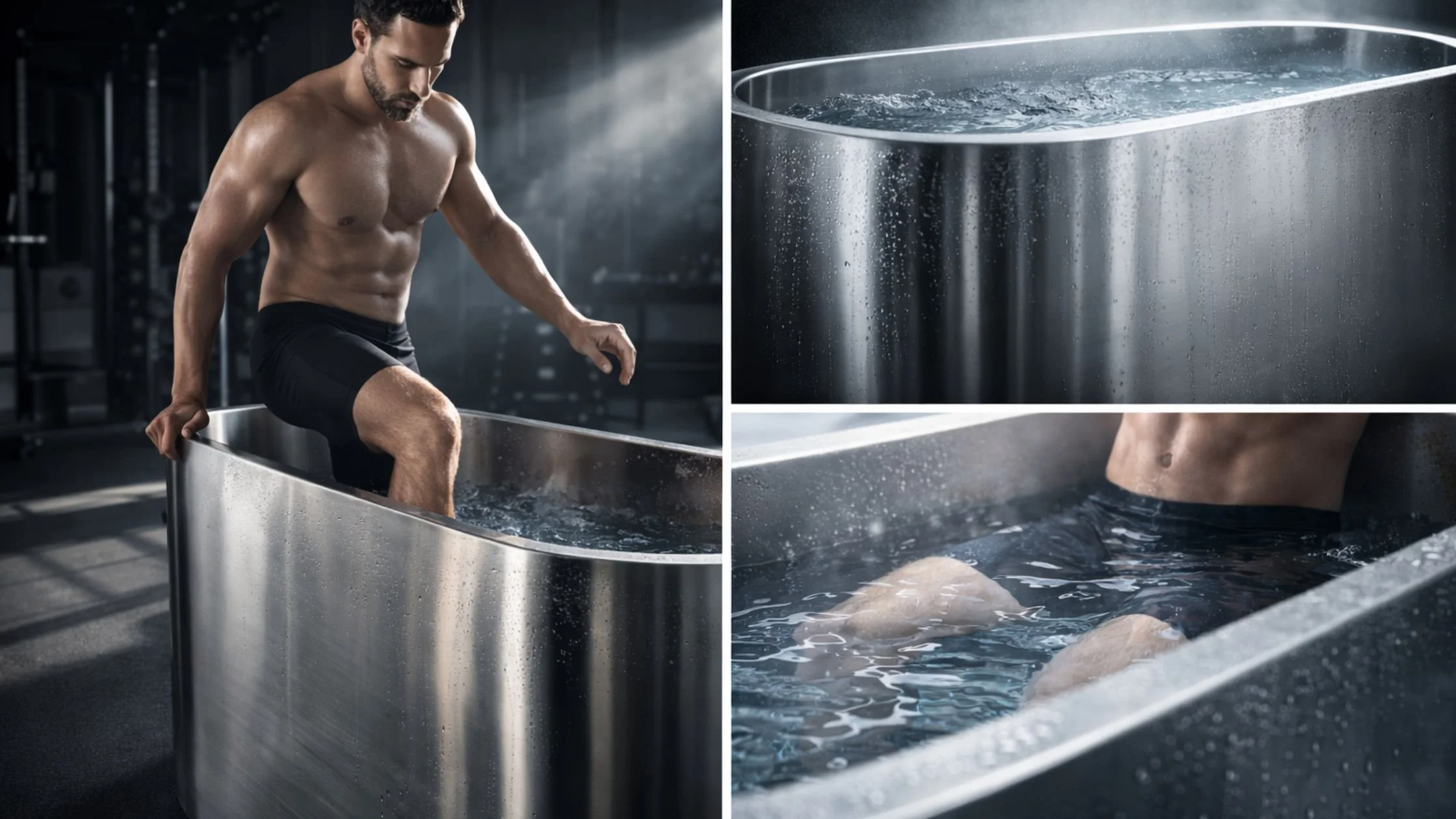
The Centurion Ice Bath is built to this specification. Marine grade 316 stainless steel, active chiller compatibility, and construction designed for permanent daily use.
View the Centurion specifications and size options here.
The Common Mistakes Athletes Make When Buying an Ice Bath
Buying for Novelty, Not Daily Use
The first mistake is purchasing a unit that works for the novelty phase but creates friction at daily use. Inflatable units with long setup times, inconsistent temperature, and hygiene limitations fall out of routine within weeks. The consequence is not just wasted money — it is a lost recovery tool during the training block where you needed it most.
Ignoring Volume
A standard bathtub holds 150 to 200 litres. A purpose-built cold plunge holds 400 to 600 litres. The difference is full-body immersion to shoulder level versus partial leg and torso exposure. Protocol research is conducted on full immersion. Partial immersion delivers a reduced and inconsistent dose.
Overdoing Cold During Hypertrophy Blocks
As noted, daily post-training cold immersion during a dedicated hypertrophy training block may attenuate strength adaptation. The solution is periodised cold use, not avoidance. Cold immersion on non-training days, or timed four to six hours after the session, reduces the adaptation interference concern while preserving recovery benefits. The periodisation table above gives you a complete framework for this.
Not Accounting for Australian Climate in Equipment Selection
A chiller rated for ambient temperatures below 25 degrees Celsius will struggle through a Queensland or Western Australian summer. Equipment specified for Australian temperature ranges requires appropriate chiller capacity. Ritual Recovery's chiller options are selected for Australian climate conditions.
Adding the Legion Sauna to Your Athletic Recovery Setup
For athletes already committed to cold immersion, adding the Legion Sauna creates a complete contrast therapy capability that most professional sports facilities offer as a standard amenity.
The Legion is built from 30mm Japanese cedar timber with a 4.5kW Harvia heater. It reaches 80 degrees Celsius in 30 to 45 minutes, which is the target range for meaningful heat shock protein response. The stadium-style tiered seating provides full-body heat exposure from feet to shoulders without requiring a large footprint.
The footprint of 131cm by 146cm means it fits in a standard garage bay, a covered outdoor area, or a dedicated home gym space without structural modifications.
For athletes managing heavy training loads across a competitive season, the combination of the Legion Sauna and Centurion cold plunge is the highest-leverage recovery investment available in a residential format.
View the Legion Sauna specifications here.
Cold Exposure Is Not a Recovery Shortcut
It is worth saying this directly. Cold immersion does not replace sleep, nutrition, training load management, or the structural recovery requirements of any serious athletic program.
What it does is meaningfully accelerate specific recovery pathways in ways that passive rest does not. Used intelligently, as part of a periodised recovery strategy, it is one of the highest-leverage tools available to a serious athlete.
Our ice bath range is built for athletes who understand that distinction and who are building permanent infrastructure around their recovery practice, not experimenting with wellness trends.
Talk to the team about the right configuration for your training setup.