Stainless Steel Ice Bath Australia: Why Material Decides Everything
Most ice bath decisions come down to price. That is the wrong lens.
The question that actually determines whether your cold plunge investment holds its value for five years or falls apart in eighteen months is this: what is it made from, and how was it built?
This guide covers everything serious buyers in Australia need to know before purchasing a permanent cold plunge setup, including why stainless steel outperforms every alternative material on the market.
The Material Problem Nobody Talks About
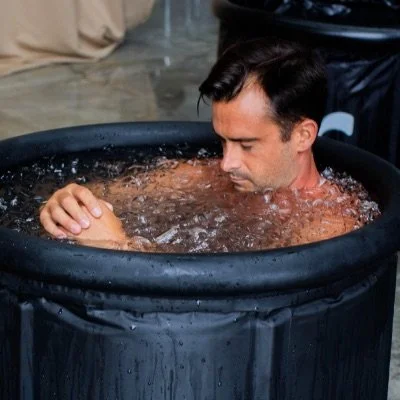
Walk into most wellness retailers or scroll through any Facebook marketplace and you will find ice baths made from four primary materials: PVC-coated nylon, polypropylene plastic, fibreglass, and stainless steel.
Each carries a different price point. Each carries a dramatically different lifespan, maintenance burden, and performance ceiling.
The reason material selection matters more than price is straightforward: an entry-level unit that fails in two years at $800 is more expensive over a five-year horizon than a $3,000 stainless steel tub that requires nothing but a periodic wipe-down.
This is the long-game calculation that separates buyers who understand value from buyers who chase discounts.
Why Stainless Steel is the Only Material Built for Permanent Installation
Thermal Stability
Stainless steel holds temperature significantly longer than plastic or fabric alternatives. The thermal mass of a 316-grade steel shell means your chiller unit works less to maintain target temperature, reducing operating costs over time.
Fabric and PVC tubs, regardless of how thick the insulation claims to be, lose thermal efficiency at the seams. Every zip, every stitched panel is a point of heat ingress. Steel has no seams in its contact surface.
Structural Integrity Over Time
Polypropylene becomes brittle under repeated thermal cycling. If you are running an ice bath at 8 to 15 degrees Celsius (or less) across Australian summer-to-winter temperature swings, plastic expands and contracts constantly. Over 12 to 18 months, this mechanical stress creates micro-fractures, discolouration, and eventual structural failure.
316-grade stainless steel does not degrade under thermal cycling. The same grade of steel used in commercial food processing and marine environments, it is engineered to withstand exactly this kind of continuous thermal and moisture exposure.
Hygiene
This point is frequently underplayed in marketing material. A cold plunge tub is a warm-ish, wet environment between uses. That is the optimal breeding condition for bacteria and biofilm.
Stainless steel is non-porous. It does not absorb biological material. Fabric and many plastic alternatives are porous at a microscopic level, which means biofilm accumulates in the material itself regardless of how frequently you change the water.
For anyone using a cold plunge daily or for multiple users in a household or commercial space, non-porous surfaces are non-negotiable.
Stainless Steel vs Other Materials: Full Comparison
| Material | Lifespan | Thermal Retention | Hygiene | Installation | Est. Cost (AUD) |
|---|---|---|---|---|---|
| 304 Stainless Steel | 10+ years | Excellent | Non-porous, easy to clean | Permanent / semi-permanent | $2,500 - $7,500 |
| Fibreglass | 5-8 years | Good | Can harbour bacteria at joins | Permanent | $1,800 - $4,500 |
| Polypropylene Plastic | 2-4 years | Moderate | Porous over time | Semi-permanent | $600 - $2,000 |
| PVC / Fabric Inflatable | 1-3 years | Poor | Difficult to sanitise thoroughly | Portable | $99 - $800 |
What "Military Grade" Actually Means for Cold Plunge Equipment
The phrase gets used loosely. Here is what it should mean in the context of a cold plunge tub.
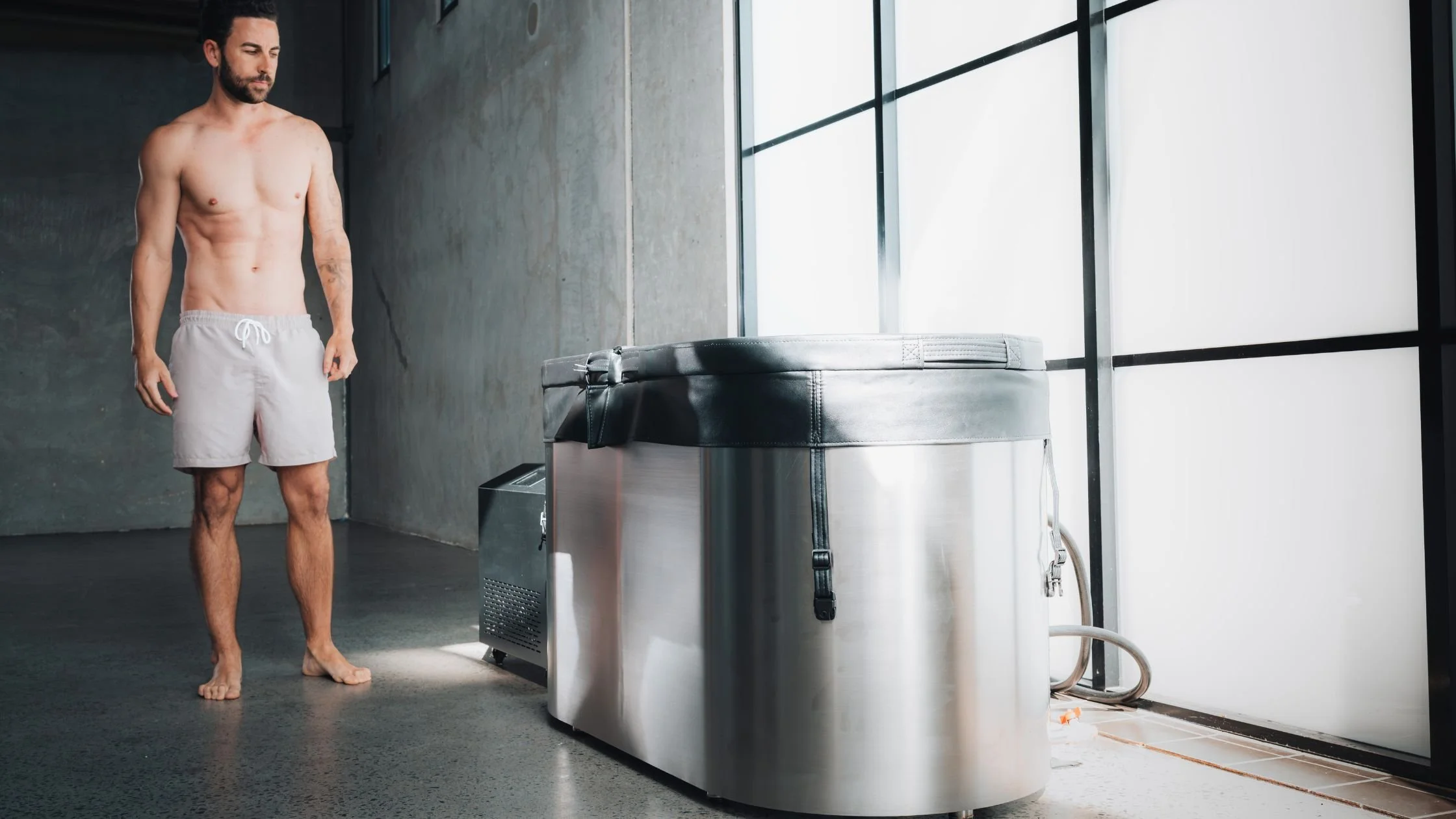
Marine and defence applications require materials that perform under continuous stress in wet, saline, and thermally variable environments. The benchmark is typically 304 or 316-grade stainless steel with passivation treatment to prevent surface oxidation. We use marine grade 316 stainless stell for the internal tubs on our Centurion Stainless Steel ice bath as well as our Roman Timber Ice bath, with a high grade 304 stainless steel for the reinforced support structure.
For cold plunge applications in Australian climates, this matters. Coastal environments carry salt air. Outdoor installations face UV load and temperature variation. An indoor spa-quality product installed outdoors in a Perth or Sydney coastal property will show corrosion within years if the steel spec is insufficient.
The Centurion Ice Bath from Ritual Recovery is constructed from 316-grade stainless steel, the same specification used in food-grade and marine applications. It is not a repurposed spa product. It was designed from the ground up for daily cold immersion use.
Explore the Centurion Ice Bath and its full technical specification here.
Objection: "Stainless Steel Ice Baths Are Too Expensive"
This is the most common hesitation, and it deserves a direct answer.
If you are comparing the upfront cost of a stainless steel cold plunge against an inflatable unit, the stainless option will always be more expensive at the point of purchase. That comparison, however, is analytically incomplete.
Consider the full cost of ownership over five years:
An inflatable or polypropylene tub at $600 to $800 will likely require replacement at the 18 to 24 month mark. Add a replacement unit, the cost of labour and ice for interim setups, and potential water damage from a failed seal, and the five-year cost easily exceeds $2,000 with nothing permanent to show for it.
A stainless steel installation at $7000 to $9,000 requires no replacement. It integrates with a chiller system. It adds capital value to the property. It holds its condition. Don’t pay twice.
The question is not whether you can afford stainless steel. It is whether repeated replacement of inferior products makes financial sense.
See Ritual Recovery's full pricing and product range here.
Objection: "Will It Work in Australian Weather Conditions?"
Australian climate conditions are demanding on recovery equipment. From Northern Territory humidity to Victorian alpine winters, the range of environmental stress is significant.
Stainless steel performs across this entire range without degradation. It does not warp in heat. It does not crack in cold. It does not absorb UV damage the way plastic and fabric alternatives do.
For outdoor installations in coastal Queensland or West Australian conditions with high UV and salt air exposure, 316-grade steel with an appropriate passivation finish is the correct specification.
Who This Product Is Built For
The Centurion Ice Bath is not designed for the person who wants to try cold exposure occasionally. It is built for individuals who commit to daily cold practice as a non-negotiable part of their recovery, health, and performance protocol.
That means athletes, founders and high-output professionals, serious biohackers, and homeowners building permanent wellness infrastructure.
If you are in that category and you are ready to make a decision that lasts, the Centurion is worth your evaluation.
Request a quote or speak with our team about the right configuration for your space.
Summary: What Serious Buyers Should Prioritise
When evaluating any cold plunge purchase in Australia, the material specification should be the first line of analysis, not the last. Price, aesthetics, and brand matter, but a beautiful product made from the wrong material is an expensive mistake.
316-grade stainless steel is the correct specification for anyone building a permanent, high-use cold plunge installation. It is the only material that pays back its cost differential over a realistic ownership horizon.
The Centurion Ice Bath is Ritual Recovery's answer to that specification. Australian made in its design ethos, built to military-grade durability standards, with transparent pricing and no hidden installation costs.